Vasty
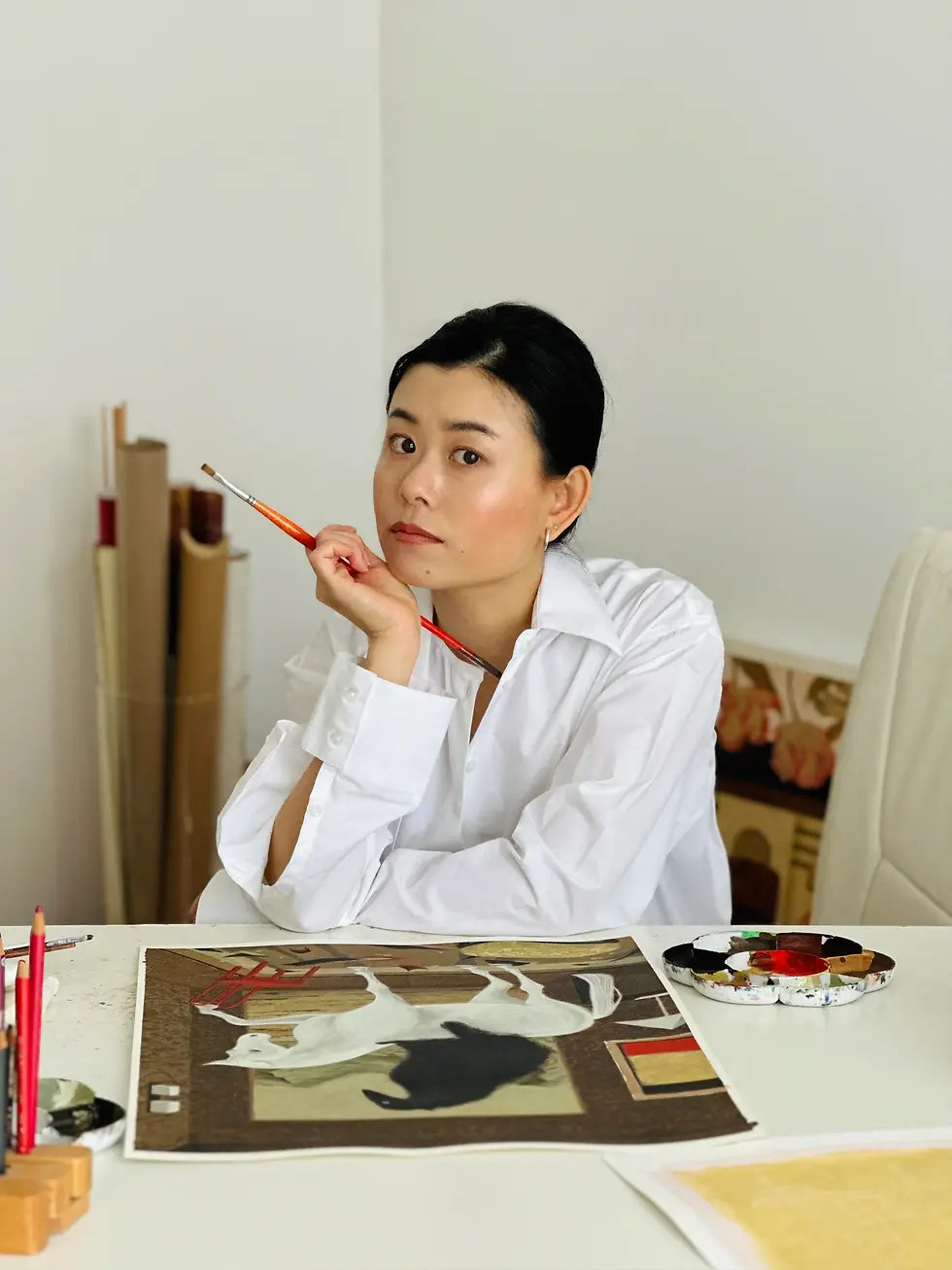
Vasty is a visual artist based in Barcelona. He works with painting, papercraft, and sculpture, building abstract forms from curved shapes and strong color. He develops the same forms across different materials, from paper to canvas to three-dimensional objects. In the studio, he is currently testing new painting methods and preparing sculptures at a larger scale. His process involves scanning, cutting, tracing, and hand-building forms. He focuses on how forms change when they move from flat surfaces into space.

Q: What first drew you to working with organic shapes across so many different mediums?
A: It was the result of a natural evolution over many years. At some point, I didn’t feel fully aligned with purely geometric or straightforward figurative styles. I was drawn to something more suggestive, something that felt more in tune with how I see things. Through this language, I like to keep my work open to interpretation while offering subtle hints of joy, searching, union, life, creation, and luminosity, without being too explicit.
That’s why I naturally leaned into organic forms. To me, they feel free and alive, and they allow me to express myself in a way that feels more honest and open-ended. Exploring them through painting, papercraft, and sculpture lets those forms take on different lives in each medium, while still belonging to the same visual world.

Q: Color is central in your practice. How do you choose the first palette for a new piece?
A: It really depends on the medium, but overall it’s always an emotional and intuitive decision.
With paintings, I explore color combinations—sometimes digitally, sometimes directly with paint—until I find a palette that resonates with me, and I still adjust as I work if the vibration isn’t right. For papercraft, I choose from the colored papers available, spending time selecting and combining them in the studio. With sculptures, it often happens at the end, when the finished form almost “tells” me what color it wants.
I’m naturally drawn to vivid, lively colors that transmit a sense of life and joy. They inspire me and even change my own mood while I’m working, so choosing color is as much an emotional decision as a visual one.

Q: You often work with fullness and emptiness, shape and counter-shape. How do these relationships guide the way a form develops?
A: I really enjoy working with that interplay, and for me it’s essential in both two and three dimensions. The use of emptiness is becoming increasingly important in my work. I feel it especially in sculpture, where you can move around the piece and sense how the empty space has its own life and power.
It directly influences how a form develops—it’s impossible not to take it into account. That tension between fullness and void guides many of my decisions, shaping how forms grow and relate to their surroundings. Working with this balance is vital to me, and it’s something I want to keep exploring further, especially in future sculptures at different scales.

Q: Your works avoid fixed meaning and stay open to interpretation. What helps you decide when a shape feels “resolved” enough to stop refining it?
A: It’s a feeling, a small internal signal that tells me a piece is finished. It doesn’t happen at the same pace for every work. Some remain in progress for months because I don’t feel they’re finished yet, while others resolve themselves more quickly and naturally.
For me, it’s about trusting that inner sense of when a piece feels complete. When that balance is there, I know the form has settled into what it needs to be.

Q: When two shapes meet and create a new color between them, that moment becomes important in your process. What makes that interaction exciting for you?
A: For me, it’s like witnessing the birth of something with its own unique life. That new hue becomes a symbol of how new forms of life emerge—it can be an emotion, a being, a memory, a beginning of something new. It’s the thrill of seeing something come to life that didn’t exist before, and that’s what makes it so special.
Q: Your practice moves between painting, papercraft, and sculpture. What are you focusing on in the studio right now?
A: At the moment, I’m really diving into exploring new techniques for my paintings. Alongside that, I’m also focusing a lot on sculptures, particularly with the idea of taking them to a much larger scale. So right now, my work is centered on pushing my painting practice into new territory and expanding the scale and presence of my sculptures.