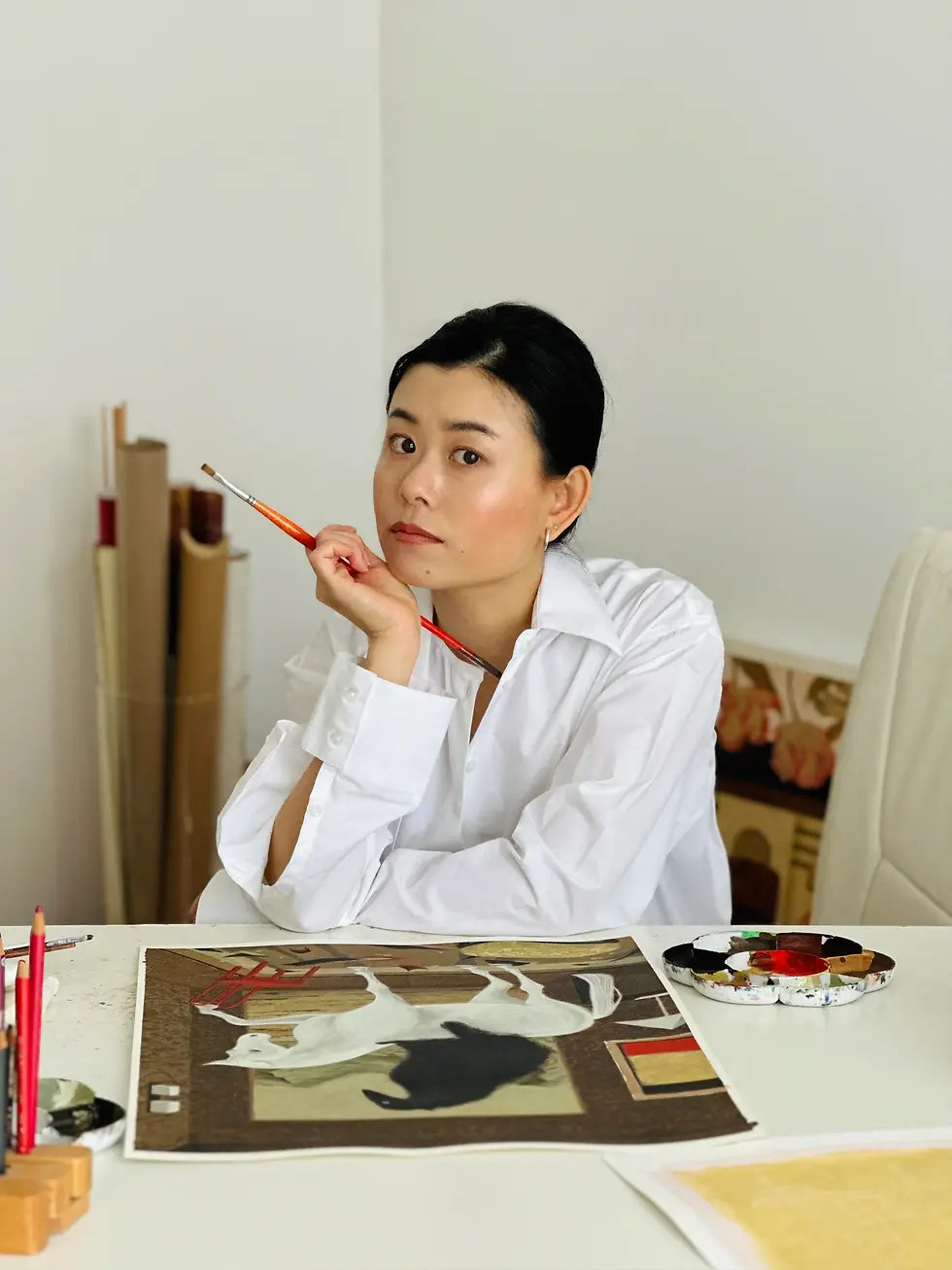
Emma Labattaglia
Updated: Feb 2
Emma Labattaglia is a visual artist based on the Mornington Peninsula in Australia. She works with oil paint, raw linen, silk, collage, and hand-stitched wire, building layered surfaces through scraping, tearing, and repair. Her background is in fine art and illustration, and her practice is strongly material-focused. She is currently developing new work between Australia and Europe.

Q: When did memory and heritage first become something you wanted to work with?
A: I don’t think I set out to work with memory or heritage intentionally. It showed up over time. I kept returning to certain shapes and ways of working without really questioning why. Eventually I realised they were connected to personal memory and my Dutch heritage. The work became a way of holding onto things that feel felt rather than clearly remembered.
Q: As you layer and scrape back, the work keeps changing. What helps you decide where to go next?
A: It’s mostly about paying attention. Each layer of oil paint leaves something behind, even when it’s scraped back. I’m interested in what happens when things aren’t resolved or smoothed over. Sometimes the beauty comes from what has been removed or damaged rather than what is added.

Q: You use materials that behave very differently from each other. What helps you choose which one to start with on a new piece?
A: It usually comes down to how I’m feeling that day. Oil paint gives me time; it can be pushed, wiped back, or left to stain, while materials like raw linen and raw silk respond very differently. Linen offers resistance and weight, while silk feels soft and exposed. Letting those contrasts sit together allows imperfections to remain visible.

Q: How did wire stitching first appear in your work?
A: The stitching came from a very personal and physical place. I have had multiple surgeries and became aware of how the body is literally held together during recovery. I became interested in the idea that repair doesn’t erase pain; it lives alongside it. Wire felt honest because it is functional and a little uncomfortable. It allows the repair to be seen rather than hidden.
Q: Your works sometimes feel open, sometimes more protected. What guides you when you’re deciding how far to take either direction?
A: That often comes from the materials themselves. Thin oil stains and raw silk can feel open and vulnerable, while heavier paint, canvas, and linen feel more protective. Emotionally, it’s about finding a balance between vulnerability and self-preservation. I’m interested in letting imperfections remain rather than closing the work off completely.

Q: As you make new work in Australia and Europe, what are you most curious to explore next?
A: Working between Australia and Europe has made me more aware of distance and how memory shifts over time. I’m curious about how experiences of separation, healing, and return can sit quietly in the work. I want to keep exploring how oil paint and materials can carry those ideas without needing to explain them.