Rachel Berkowitz
Rachel Berkowitz is a painter based between Los Angeles and London. Her recent body of work, “Life is Soirée,” draws on references from Rococo painting, historic interiors, gardens, and social rituals. She builds her paintings around gatherings, movement, and shared moments, often working to music and letting rhythm guide the process. Alongside studio work, she paints live at events, treating painting as a performative act shaped by place and atmosphere. The series will be shown at Gallery 612 in Los Angeles, with new works continuing during an upcoming residency at La Napoule Art Foundation in France.

Q: What first drew you to the worlds of Old Masters, Rococo, and fresco traditions, and what made you want to reimagine them through a contemporary feminine lens in “Life is Soirée”?
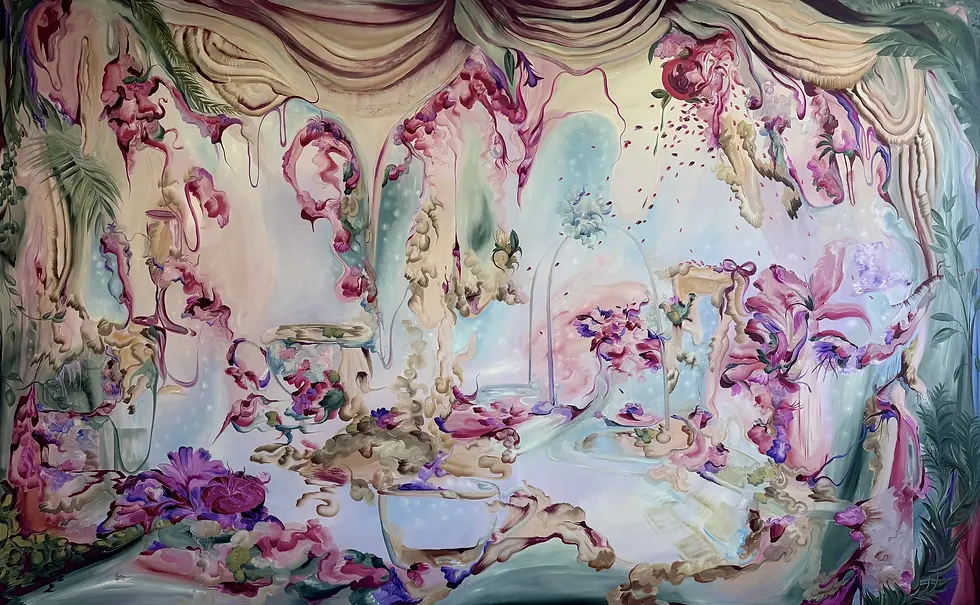
A: I was very lucky from a young age because growing up in London meant constant museum visits, with the Wallace Collection as a favorite, along with trips to European palaces and churches. Old Masters, Rococo, and fresco traditions were a visual constant in my childhood and gave me a sense of relaxed escapism, romance, and a deep love for social gatherings. I was always drawn to dreamy, portal-like historical scenes with their recognizable color palettes, and that early exposure shaped my attraction to ornament, theatricality, and immersive environments. As my practice developed, I learned that Rococo masters were primarily men, and that their “cheeky” depictions of women in leisurely, pleasure-filled scenes were later dismissed as frivolous and unacceptable by French society. It feels important to reclaim that space through my own abstract expressionist feminine lens. At the heart of my work is an acceptance of indulgence, which becomes its own act of resistance. I want to celebrate feminine leisure and pleasure, rather than reject it. My grandmother has a ritual of ordering dessert for herself in every restaurant, a small joyful act that insists that pleasure is nourishment. She claims that the key to living a long life is to surround yourself with friends and family and to indulge in what makes you happy. This wisdom and her charming habit thread through my “Life is Soirée” paintings. Whimsy and dream-like portals convey Rococo ideals in a welcoming way, inviting viewers to embrace sweetness, rest, ritual, and early-love glow without apology. Feminine softness and playful energy keep the work feeling young in spirit and full of celebration.
Q: Rituals like high tea, gardens, and candlelit gatherings appear throughout the series. What draws you to these moments, and what kind of atmosphere do they help you build on the canvas?
A: Timeless rituals like high tea, garden wandering, candlelit dinners, and the aesthetic drama of dance shape the visual atmosphere of this series. To some, they may seem frivolous, but to me they offer comfort, beauty, and a sense of shared presence with the people I love. These rituals give me a way to build scenes that feel both intimate and theatrical. Fashion references (bows and ribbons), floral motifs, and curtain-like forms often appear in the work, as if I am staging a small performance of joyful living. Dancing, both physically and spiritually, is when I feel the most free. It is the epitome of celebration, and I bring that energy directly into my work. All of these influences blend into moments of movement, softness, and glow, where each canvas becomes its own celebration of pleasure, and together they create a unified world of ease and emotional release.
Q: Your paintings have a strong sense of movement and flow. What usually guides how that movement develops?
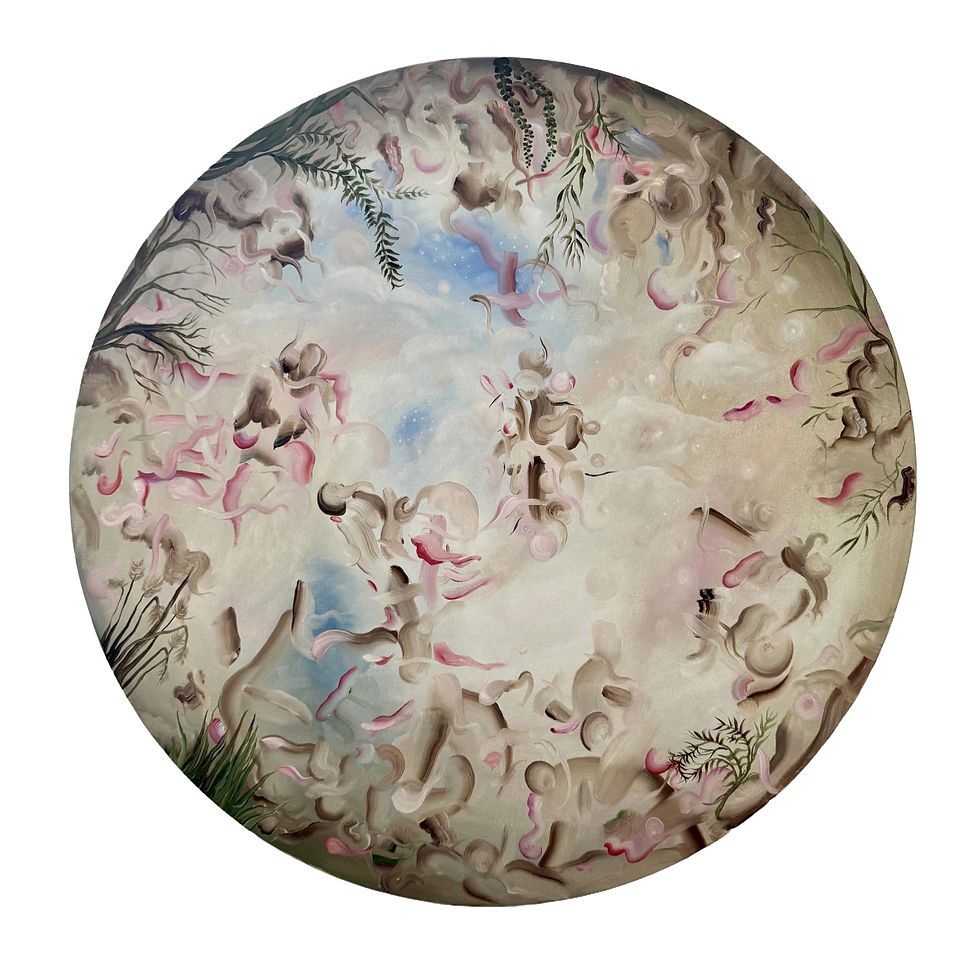
A: I always paint while listening to complete albums, from classical music to hip hop and jazz, letting rhythm guide my marks. The physical act of painting feels like a dance, and each piece unfolds as a kind of choreography. My mood and the space I am in also shape the flow, so the movement becomes a blend of music, emotion, and environment working together on the canvas.

Q: You also paint live at gatherings and events. What feels different about working in that environment compared to the studio?
A: Live painting is essential to how I think about visibility and duration. I’m drawn to creating work in real time over extended periods, where audiences can enter, leave, and return as the painting unfolds. I see this as a form of spectacle, emphasizing the theatrical nature of painting itself. Painting live at events is very different from working in my studio. In public settings, I have to be far more prepared and decisive, which always feels like a fun challenge. I work faster, relying on physical memory from previous paintings, and I often bring some quick visual historic references with me. There is no time to overthink or stare motionless at the canvas for two hours straight, which forces a greater trust in instinct and movement. What I love most about live painting is the spontaneity. I respond directly to the music, the surrounding visuals, and the energy of the room, all of which shape the final work in real time. That environment introduces elements I would never have access to alone in my studio, and I’m often pleasantly surprised by the outcome. Interacting with people while I paint is energizing, especially since spending long hours alone in my studio can feel isolating. Because my work centers on social gatherings and celebrations, incorporating a performative painting process feels like an essential extension of the world the paintings themselves are creating.
Q: Your work carries influences from both London and Los Angeles. How do those places show up in the mood or color of a painting?
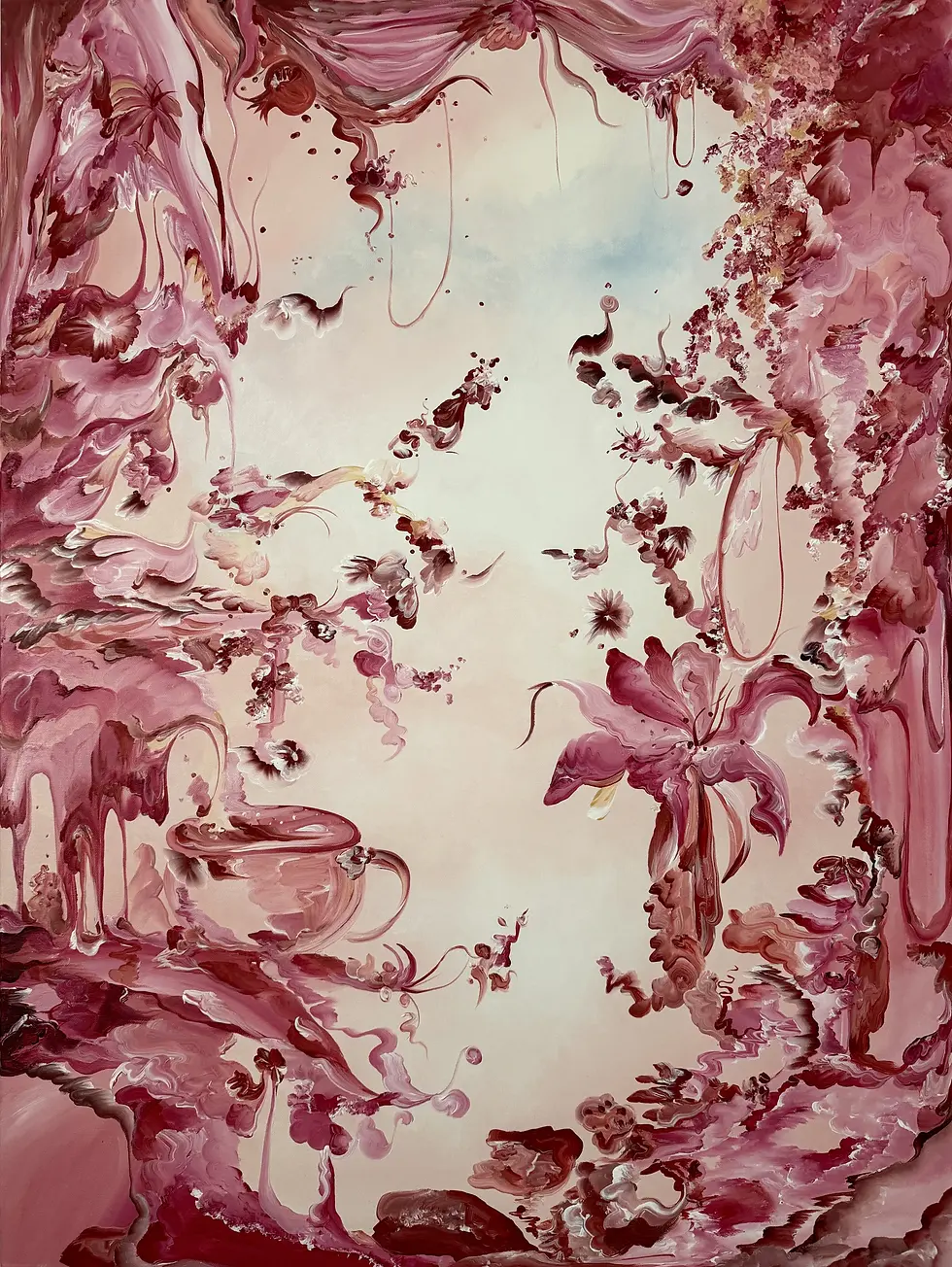
A: Light. It’s all about the light. London is where the series first took shape, and many works carry that London mood through cooler tones, muted palettes, and softer atmospheric skies. The city’s gardens, historic architecture, and overcast light inspire my use of misty greens, pale blues, and gentle color blocking that feels almost theatrical, like a stage set before the performance begins. Los Angeles brings an entirely different sensibility. The golden undertones of the LA sunshine, the bright reflective natural light, and the dreamy smog glow have all pushed my paintings into more luminous, saturated, and portal-like worlds. Living and working in LA has expanded the Soirée atmosphere into something more surreal, warm, and open, allowing dreams and the subconscious to seep directly into the color and movement of each piece.

Q: You lead æsthetíque studio, a creative hub in Los Angeles. What directions feel most exciting to you right now, whether in the studio or through æsthetíque?
A: I do, and it has been one of the greatest joys of my practice. At æsthetíque studio, I host community art events ranging from adult classes to kids workshops, music performances, and art therapy gatherings. With gratitude to DTLA Art Night, æsthetíque studio has become a place where people feel inspired, supported, and creative, which is exactly what I always hoped it would be. I have an upcoming showcase at Gallery 612, where I’ll be exhibiting new “Life is Soirée” paintings. The opening reception is January 9th at 6 pm, and it feels like an exciting moment of expansion for the series. In the immediate future, I’ll be continuing this body of work during an artist residency at the La Napoule Art Foundation in the South of France. I’m curious to see how the French Riviera light, landscape, history, and slower pace will shift the tone and atmosphere of the paintings. I see the residency not as a departure from “Life is Soirée,” but as an evolution shaped by place, presence, and the simple act of living. I feel incredibly energized about everything that is unfolding right now, and I hope my artwork reminds you to stop and celebrate life.


