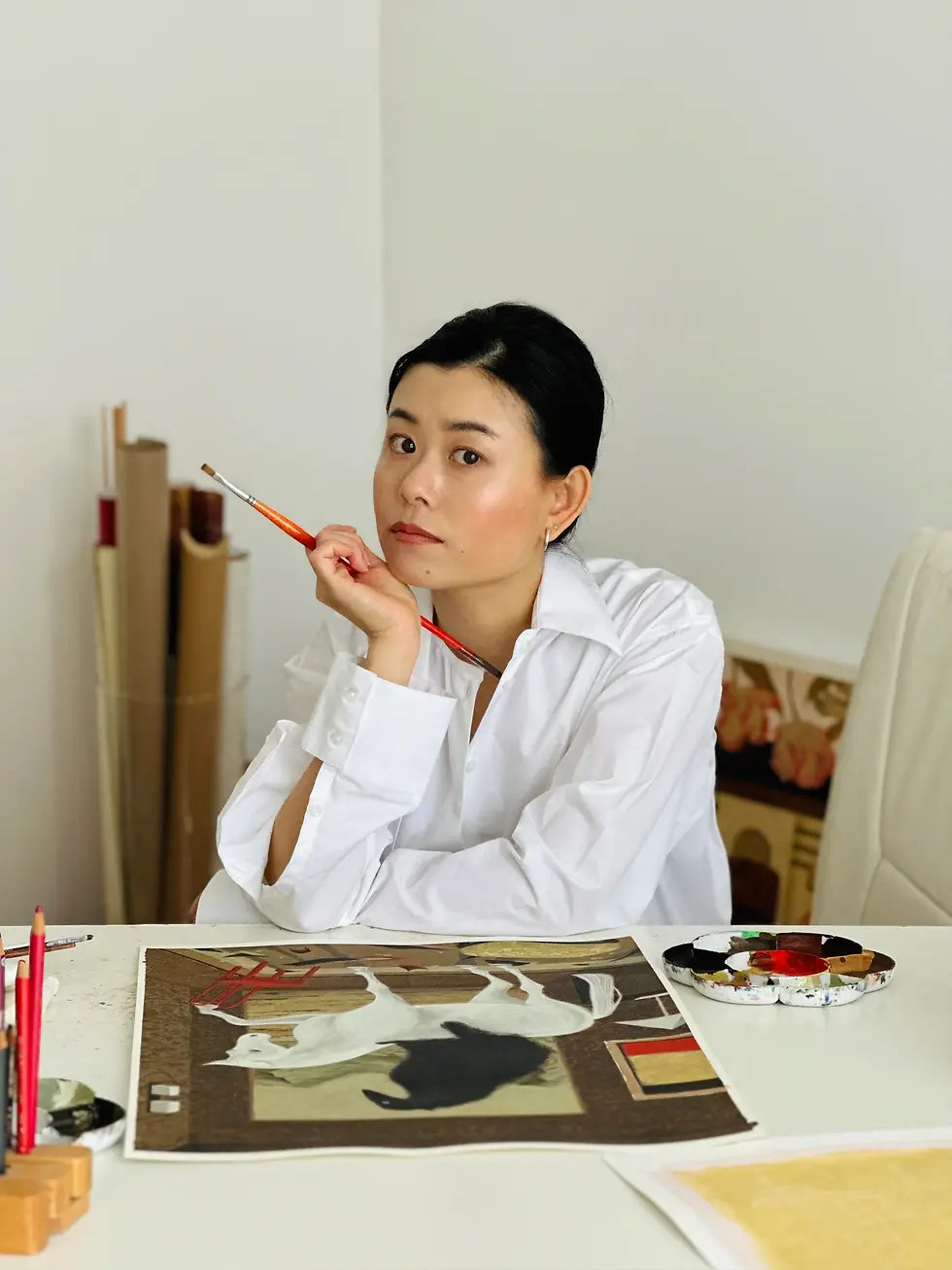
Alimo
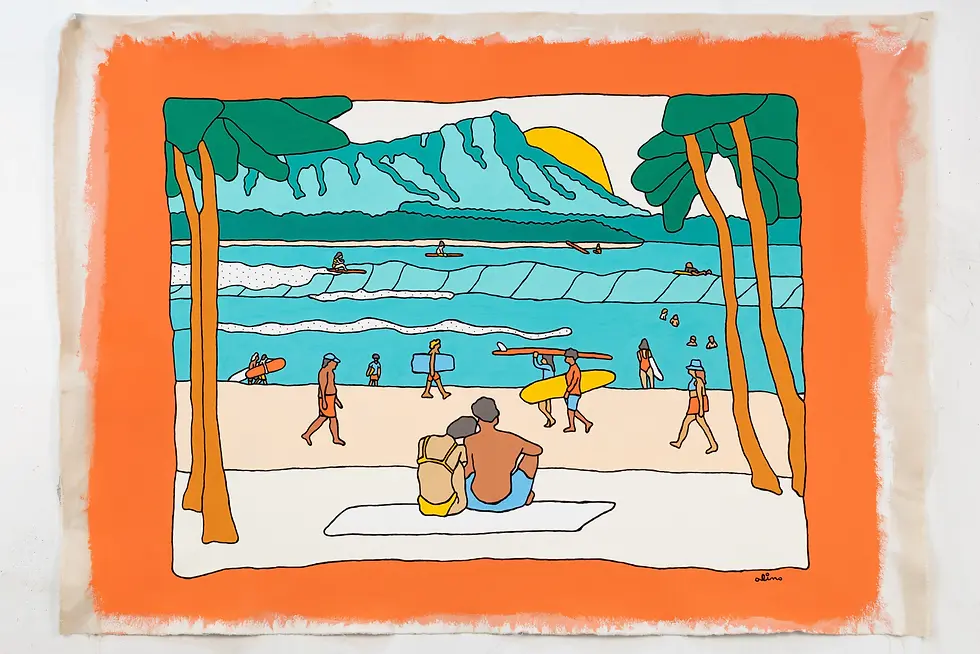
Alimo is a painter and illustrator, born in Oregon and now based in Brooklyn. He starts his mornings at the kitchen table with a sketchbook, drawing and painting scenes from the day before as a daily habit. His images come from watching people, being outdoors, and moving through places on foot, on a board, or in the water. He works with simple lines and strong color, focusing on scenes from daily life.

Q: How did this visual world of yours first begin to form?
A: Like most kids, I started to paint and scribble with crayons when I was a rugrat; I just never grew out of it. I remember learning about Michelangelo as a kid and going, “I want to be an artist.” It was something I never lost touch with somehow. Growing up, I did lots of sports—running, soccer, skateboarding, and snowboarding—but once it came to high school and college it came full circle to create. I credit snowboarding and skateboarding, as I was filming my friends every day; then at school, ceramics and painting were a huge passion of mine.
I remember reading Thrasher Magazine and Transworld Snowboarding and wondering how they made the magazines. It was such a mystery to me how you could print art on paper. I didn’t know it at the time, but that was graphic design, and it changed my entire life.
In college, I studied digital arts, although that meant learning all the mediums and ended up being more of a concept school—a way to tell your story rather than just a cool painting. That part I loved. This is where Alimo was born in so many ways.
After college, I ended up traveling around the world and ended up in Vietnam, where my whole design career started. It was wild. I was illustrating manga characters on milk cartons and working at different agencies there. I spent a year there creating, then moved to San Diego to be closer to my brother. I ended up freelancing for different surf companies, doing catalogs and T-shirt graphics. It ruled.
A few years in, I moved to San Francisco, where I started to freelance for large tech companies, and soon enough me and three friends quit our jobs and opened up a studio in the Mission.
We had no idea what we were creating, but we rented this place out. I ended up drawing every day, which is where my art was realized again. I was having so much fun, posting random drawings on Instagram and treating all of this as an exploration. During these studies, the style that we know today was forming.
During this time, I ended up applying to a fair called “West Coast Craft” in SF and got in. I had no art, no merchandise, or anything, but I had six months before the fair. I dropped everything and created my first full collection of art and merch, along with an installation to display. That event put me on the map. I ended up partnering with Lou & Grey for a few drops, then a collaboration with Patagonia, and a few others. My merch was taking off.
A few years later, I shifted back into my fine art, to focus on collections and solo shows with digital and physical galleries. It was to create a story, rather than random drops. It pushed me into a new direction of dialogue where we are today.
Q: When you start a new work, what usually comes first for you?
A: My daily sketchbook and drawings keep me grounded. It’s almost like a sanity check or a way to clean out the garage. I get to offload these ideas or clutter (if you will) that was building up that day. To do this spring cleaning, I draw each morning before I do anything else. I get that coffee and smoothie going, then sit down at the kitchen table and draw. Most of the time, this isn’t related to any project. It’s the brain dump of observations from the prior day I noticed.
When a new project comes in, or when I’m working on a new show, this library of ideas is where things start and where I pull inspiration from. I use these books as a time portal of experiences I’ve had. I can look at any sketchbook and know exactly when and where I was just from one sketch. It’s like a roll of film, where it’s a diary of my past experiences to pull ideas from.

Q: Your daily sketching is a big part of your process. How do those quick drawings shape the paintings you make later?
A: My daily drawings are a huge part of my process for brain dumping ideas. These quick gouache studies range from 30 minutes to three hours each morning, and I treat this as my visual diary of observations. When I’m creating that morning, it’s loose and free. Nothing matters, and that free form is my favorite part of my day. Each sketch, I pull inspiration from iPhone photos I took to create my own Alimo world. From there, if the idea is forming for a larger body of work, I’ll pull many sketches together to create a larger composition on paper or canvas.

Q: You mix simple lines and strong color with scenes from everyday life. How do you decide what moments are worth turning into a painting?
A: With all the scenes I create, I’m typically focusing on people and their expressions—what they are doing, where they are going, and how it impacts this monotonous moment I’m trying to capture.
People are interacting all day, whether it’s an exciting moment or just a chore. That dialogue of people helps me choose moments to tell that story. I want to share this with the viewer to bring in this nostalgic feeling. This may trigger a memory they can relate to, or possibly inspire them to create this memory for the future.
Q: Nature and community are central in your work. How do they shape the world you create?
A: I love being outdoors. It’s my way to stay balanced. Snowboarding and surfing are a huge part of how I see the world, and I’ve been very fortunate with this lifestyle, taking me to some pretty cool places. With all these travels, I try to capture these moments to share with my art. Whether I’m on my own, with family, or with friends, all my experiences shape the world I create. This curiosity keeps me balanced and helps me keep asking questions with a five-year-old kid mentality to explore.

Q: As you look ahead, what would you like to explore next?
A: The core thesis of my creative practice is accessibility. I want everyone to have art, and if they resonate with mine, I want to have options from every tier. Whether that’s a small print, clothing, fine art, digital art, or larger installations. I love every application and want to continue exploring whatever fits the idea I’m trying to bring to fruition.
Right now, I love the idea of larger public installations in parks, or more animation that can bring in another level of experience for the viewer. With the digital age of small screens, thinking more about experiences that bridge both the digital and real world is super interesting to me.