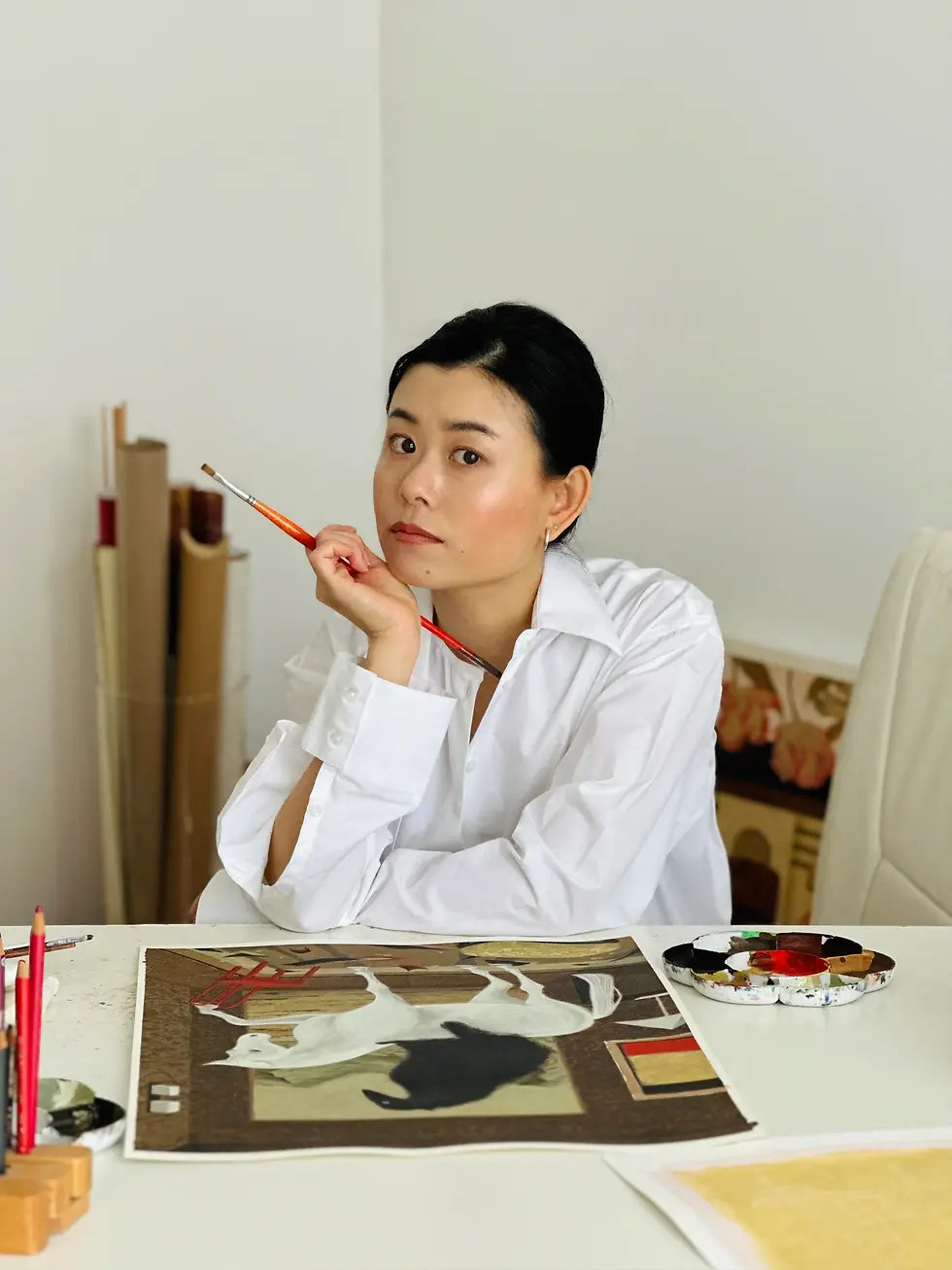
Parafeno
Pablo Aragón Pérez pieces together digital worlds with the sensitivity of someone reconstructing a memory. Part real, part imagined, all personal. Working under the name Parafeno, his artistic alter ego, he explores emotional terrain shaped by childhood, control, and the blur of online life. Trained in industrial design and fluent in 3D and AI, Aragón approaches digital tools not just as mediums but as extensions of thought. His images balance precision and softness. Structured yet open-ended. Like a dream you remember in fragments — and keep thinking about long after you wake.
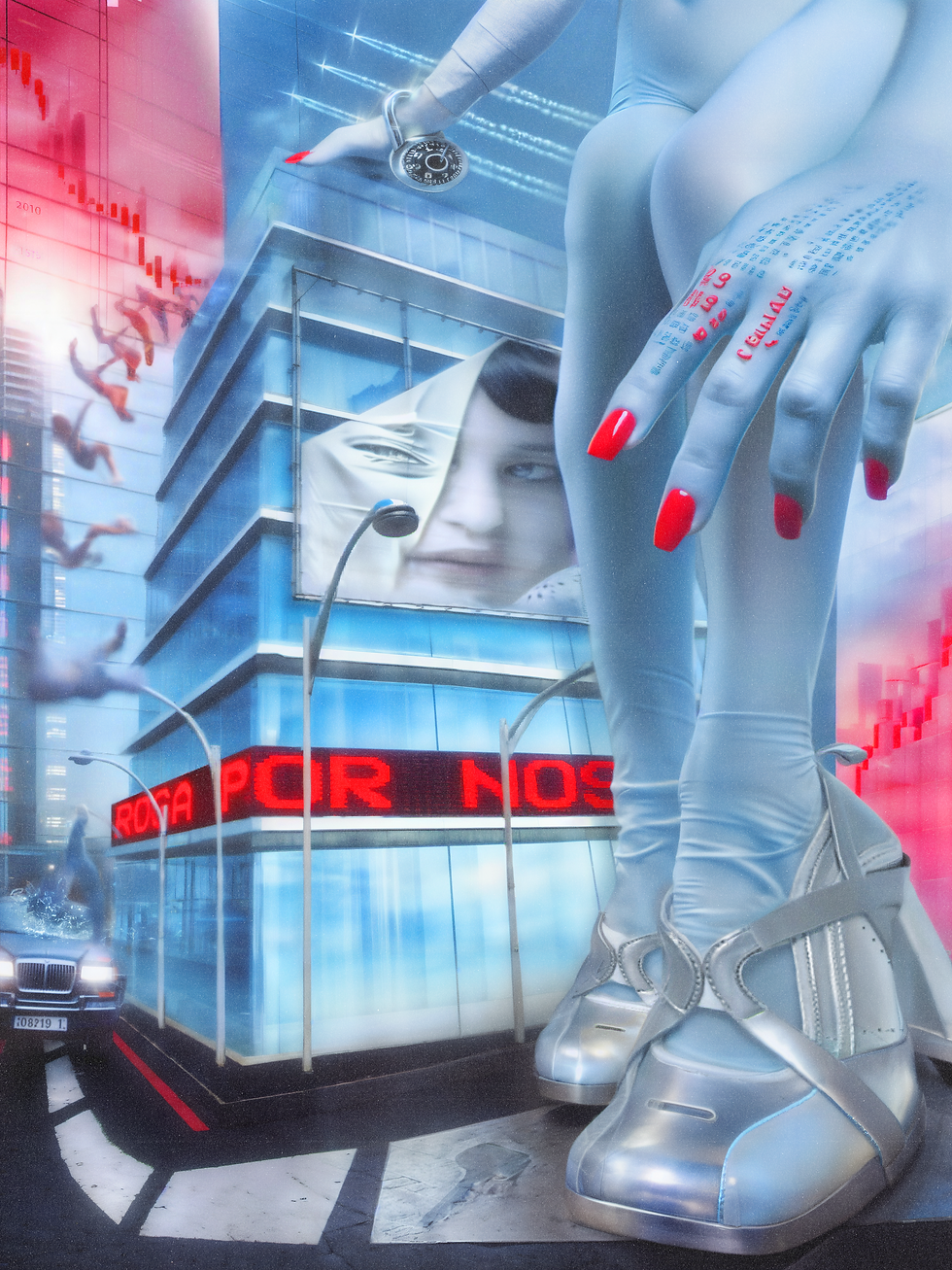
Q: What’s usually the first thing that shows up when you start building an image?
A: It often begins with a loose element or a very basic composition. This usually happens as I'm drifting off to sleep, when my internal dialogue starts to distort like a funhouse mirror, and so do the shapes I imagine. I think that distance between reality as we perceive it and the subconscious perception is what intrigues me, and I try to maintain that in my work. It feels like a doorway to inner, intuitive wisdom and keeps me connected to the piece.
Q: Your images feel quiet, but never flat. What do you think gives them that edge?
A: I've always been interested in intention and structure in art, rather than details or subtleties. For example, in music, I deeply appreciate songs with strong, intentional, and punchy rhythms, or very thought-out lyrics.
There were years when I only listened to Spanish copla, which embodies much of what I'm talking about. That structurality seeps into everything I do — that meticulous control. However, I'm not like that with details; I don't like to over-specify things or bring them too much into the rational plane. I prefer them to remain as sketches, leaving room for others to fill in the gaps.
I believe part of their appeal lies in this very contrast — the intentionality and structure of the foundations versus the lack of concreteness in the superficial form.

Q: You bring in themes like childhood, control, and uncertainty. What keeps those ideas close?
A: Personally, I've always felt like a child inhabiting an adult world. I think it's something widespread in my generation, among those of us raised on the internet.
This infantilization, which I believe is external in origin and a consequence of exploitation and denial of personal agency — renting homes, being owned by your company, identifying through consumption habits — is partly the seed of my work. The insecurity of a child in a dysfunctional society, an unknown longing of inexplicable origin since they know nothing else but feel deep down that there's more to life — an illusion beyond the ruined house where they have breakfast before going to school.
Q: How much do you plan a scene, and how much just slips in while you're working?
A: Usually, it's a balance. As I mentioned earlier, the initial seed often comes from the subconscious as I'm falling asleep. The next day, I start looking for references based on that and begin building, which usually takes a few days. I do like to have everything planned. My approach to a blank file is to plan almost everything and then work on the piece to resemble as closely as possible what I initially had in mind — that's the benchmark. I know it's a very controlling way, haha; after all, I'm an engineer, and my mind works that way. However, many times I can't make the piece work with what I had in mind, and I'm forced to change something.
It's a compromise due to my technical limitations or the software's limitations. It's also an exercise that benefits me in life in general; working with generative models is also like that, in a way. There's a spontaneity in AI — a delegation of control that often pleasantly surprises me and complements my rigid personality.
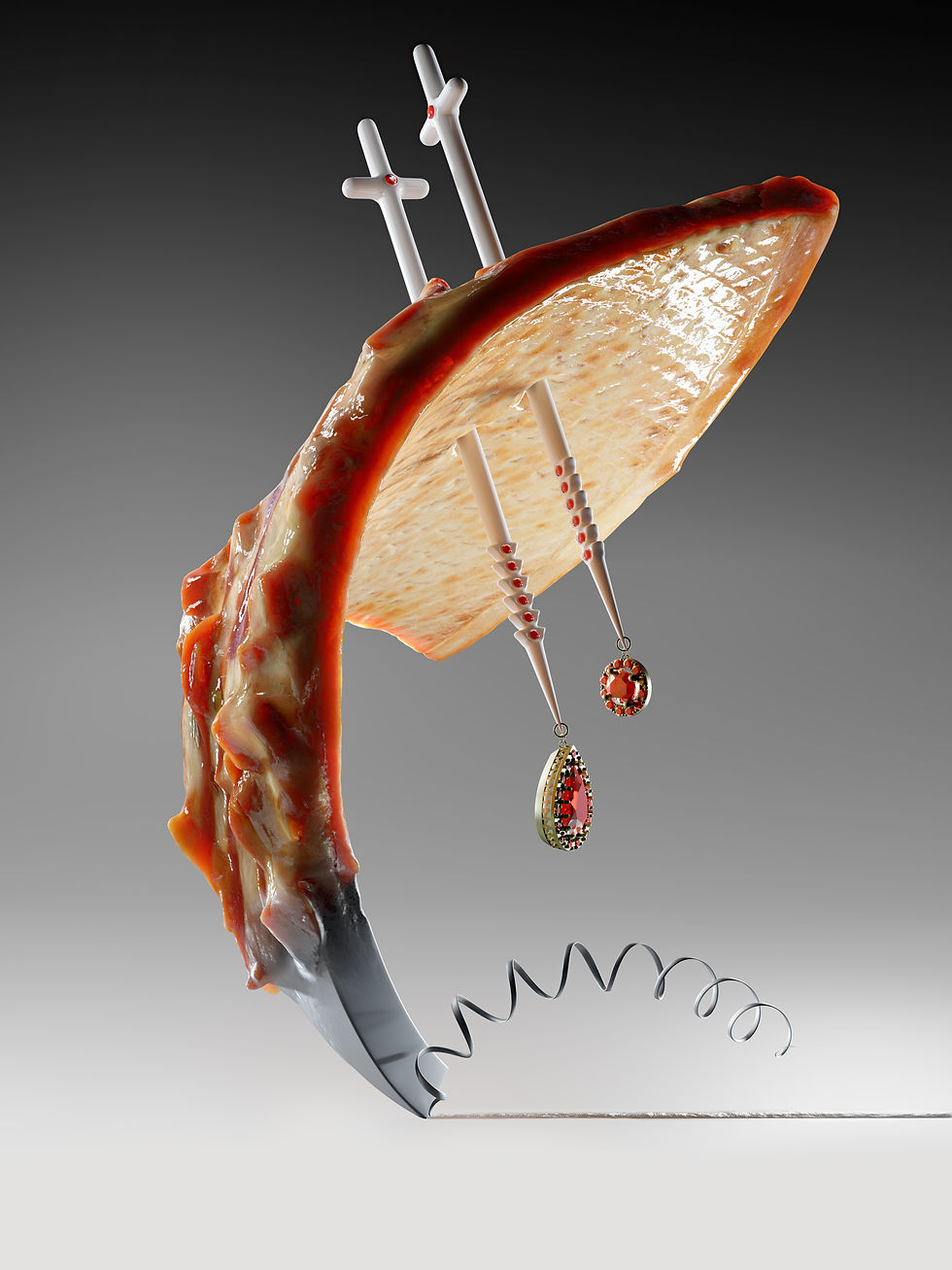
Q: You use both 3D tools and AI. Where does the emotion come in?
A: Ultimately, both tools are just that — tools. The core idea is always something that resonates deeply with me, and that emotion isn't less intense when working digitally or in any other medium. I believe that the more I refine the core message, the more intense and efficient it becomes.
I'm like that too when I have to address an issue with someone; I like to jot down arguments and topics to discuss and see them on paper, get them out of my head. That way, I ensure nothing is left unsaid, I don't deviate, and each point has its proper weight. It's a pragmatic way of understanding emotion, I suppose.
Q: What makes digital space feel right for what you want to say?
A: I think it's something that came naturally to me. At ten years old, the government of my region gave every child my age a laptop, and since then, the medium has become an extension of my body and has shaped my mental patterns. For me, it wouldn't make sense to delve into traditional arts; I've never felt curiosity for classical media and didn't have the means to explore them either. The things that have moved me the most have been of digital origin or purpose, in one way or another. There's a somewhat nostalgic closeness — a sincere and selfless community with a real passion for their niche interests, escape worlds that gave you the space to face the real world.