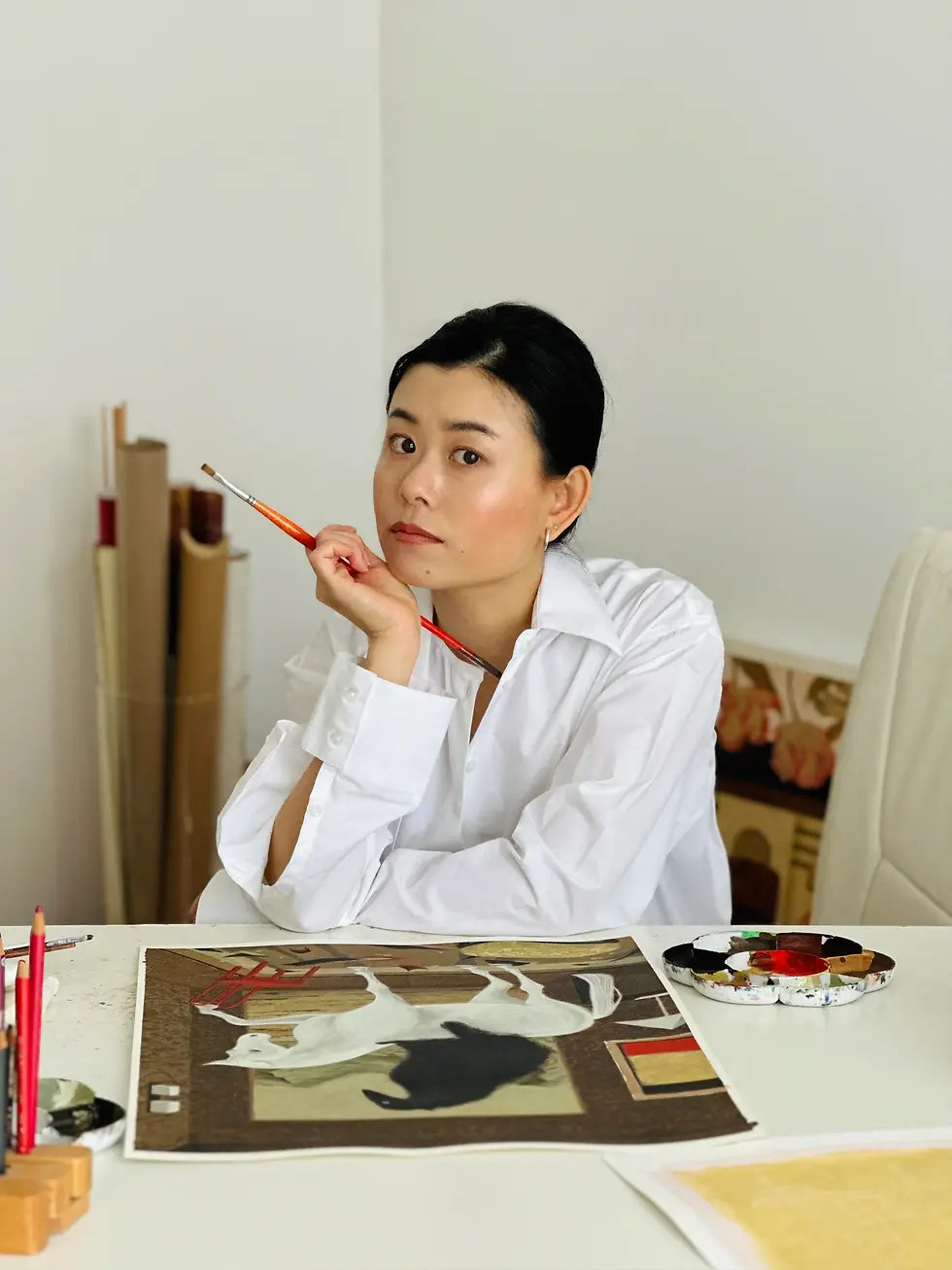
Michelle Maroon
Michelle Maroon is a multidisciplinary artist based between Berlin and Connecticut. She works with drawing, painting, and sculpture, using line, layering, and hand-built structures as her main tools. Her background is in sculpture, but drawing runs through everything she makes, from paper works to 3D pieces built with filament. In the studio, she’s currently developing new sculptural work using a 3D printing pen, building forms directly from drawn lines.

Q: What first pushed you toward working across drawing, painting, and sculpture?
A: I don’t think it was a decision so much as a refusal to stay in one place. Drawing has always been the root, but sometimes the line wanted weight, or thickness, or to stand up and exist in space instead of pretending it was flat. Painting let the line dissolve and stain; sculpture let it become a body. Moving between them feels natural—like following the same thought as it changes volume.

Q: You build surfaces through layers, revisions, and small interruptions. How do you know when a surface is ready for the next move?
A: There’s a kind of tension I wait for. When the surface starts to feel too settled—or too polite—that’s usually the signal. I’m listening for resistance: when the work pushes back just enough to suggest another interruption. If it feels comfortable, I’ve probably waited too long. I move when the surface pushes back just enough to make me uncomfortable.
Q: Humor, memory, and identity show up in your works. When you’re working, what tends to bring those elements forward?
A: They usually arrive sideways. Humor shows up when I stop trying to control the tone. Memory creeps in through repetition—doing something again and again until it starts to echo. Identity isn’t something I place into the work; it leaks in through my hand, my habits, my blind spots. The more I get out of the way, the clearer those things become.
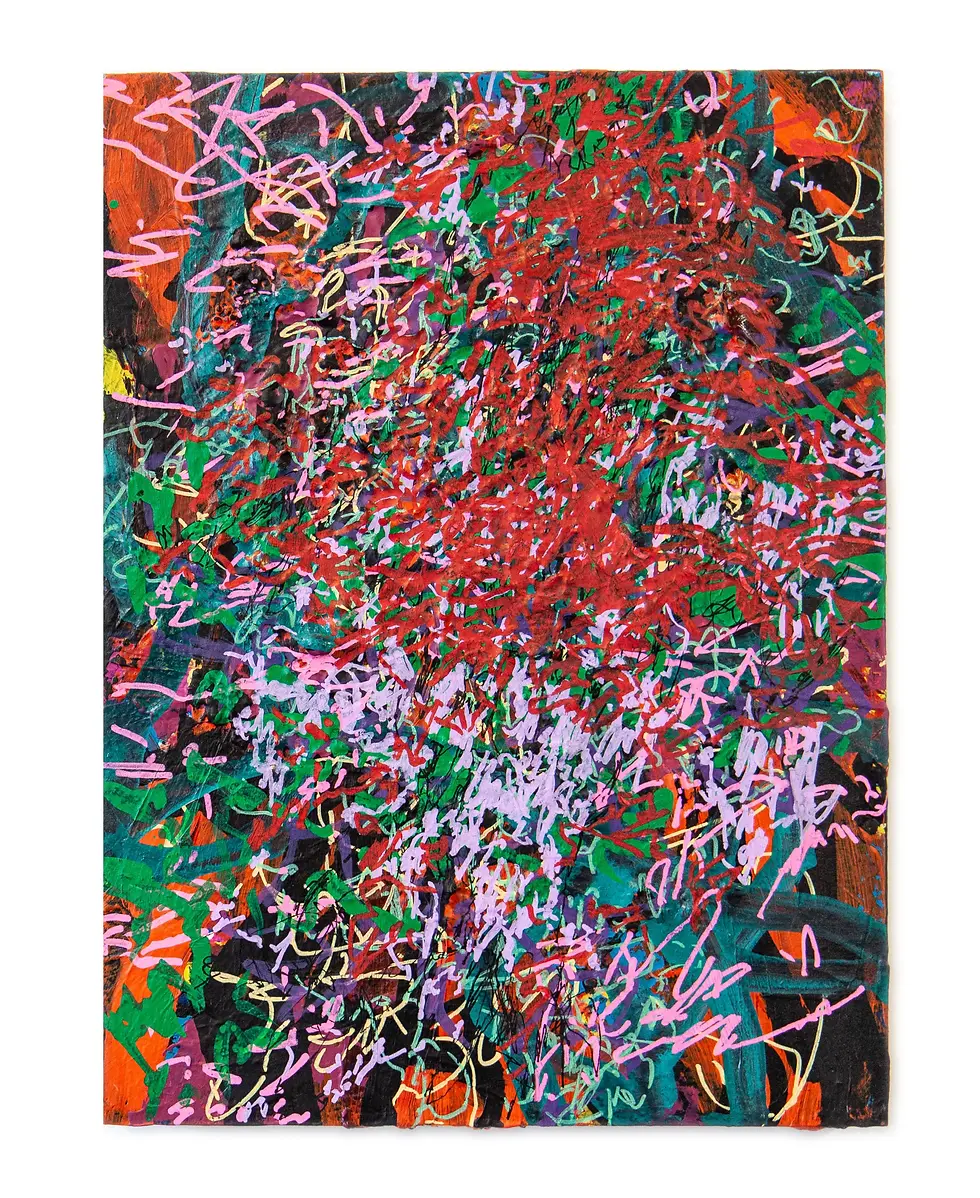

Q: When you're shaping a sculpture, what helps you figure out the form it wants to take?
A: I follow the same instincts I use in drawing—pressure, pause, excess—but in slow motion. The form reveals itself through accumulation. I pay attention to imbalance, to where it feels awkward or slightly wrong. That discomfort usually points me toward the next adjustment. I’m not aiming for resolution as much as recognition.

Q: How do you decide the next step when a piece starts changing as you work?
A: I try not to rush to fix it. Change usually means the work is finally saying something back to me. I sit with the confusion and respond to what’s actually there instead of what I thought I was making. Most decisions come from noticing what the piece is already insisting on.


Q: You’ve described your process as following what the materials want to do. What directions feel most interesting to you right now?
A: Right now I’m interested in letting things be a little unruly—letting humor coexist with tension, letting forms feel unresolved, letting materials show their limits. I’m drawn to work that feels slightly off, like it’s caught mid-thought. That space—where control loosens but intention doesn’t disappear—feels like where the real work is happening.