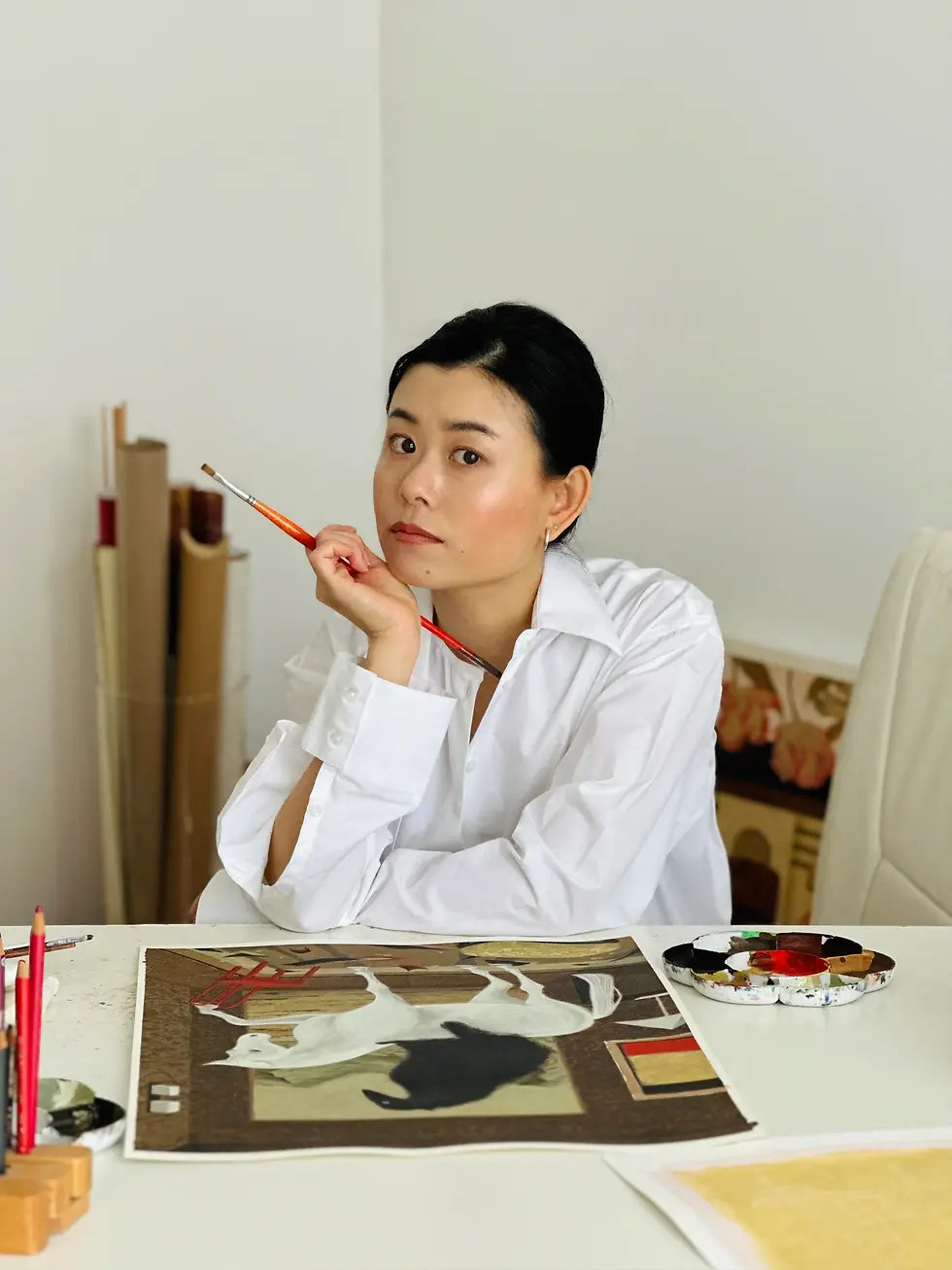
Margaret Lipsey
Margaret Lipsey’s paintings follow emotional states through layers of color, rhythm, and gesture. After working as a professional chef, she turned to painting to stay connected to movement and sensation. What started as something intuitive became a steady, evolving practice. Now based in Montreal and working between Canada and Michigan, she creates pieces that reflect cycles of healing, inner shifts, and the quiet complexity of women’s lives. Her work draws on memory, energy work, and a kind of honest attention to feeling. Painting, for her, is a way to tune in and offer something real.

Q: You describe painting as a dialogue. What kind of conversations are you most drawn to lately?
A: I find myself drawn to conversations that live just beyond the edge of my current understanding, dialogues that weave together seemingly disparate spiritual, cultural, or philosophical threads. I was raised in the Presbyterian church but began exploring Buddhism, Islam, and various New Age philosophies in college. Over the past 30 years, these conversations have spiraled in and out of my life, evolving as I have, expanding to include Kabbalah, Human Design, Tibetan Buddhism, Hinduism, and Christianity.
Most recently, I’ve spent the last two years training as a Reiki Grand Master, which has deepened my connection to energy and amplified the sense that we are all profoundly connected. That training sent me searching for proof that the ideas we hold about how to live well, no matter the culture, are often rooted in the same desire for balance, healing, and wholeness.
What compels me now are the echoes between traditions—how different belief systems often point toward the same truths in subtly different languages. I’m not interested in debate so much as connection: the spaces where old wisdom meets contemporary life. The human experience, at its core, hasn’t changed all that much, and I’m drawn to the spiritual conversations that honor that and ones that feel timeless.
Q: Has your background as a chef influenced how you think about layering and movement on canvas?
A: Absolutely. One of the most direct influences was my comfort with palette knives, which came from my work in pastries.
That tactile experience—spreading, layering, cutting through buttercream—translated seamlessly to acrylic painting. Being able to play with texture is what drew me fully into acrylics as a medium, and palette knives became a way to build up, spread thin, and carve into the paint, offering endless possibilities for movement and depth.
In addition, I remember an experience I had while developing recipes for a Mexican restaurant. The owner wasn’t especially excited about any individual ingredient we proposed—until we made him a burrito. Suddenly, everything changed. The layering of flavors, the way the components worked together, created something far greater than the sum of its parts. I think about my paintings in much the same way. I might be moved by a single mark or a color interaction in one corner, but it’s the orchestration, the cumulative layering, that gives the piece its power.
There’s also a strong throughline in terms of composition. In culinary school, we were trained to consider form and balance when building a plate, crafting hors d’oeuvres, or styling a table. “You eat with your eyes first” was our mantra, and in hindsight, that’s where I began practicing visual harmony—long before I picked up a brush. Now, when I sit with a painting, my subconscious is asking many of those same questions: Is there balance? Is there tension? Does something need to be added or taken away to more clearly express what I’m feeling?
Q: “Almost Completely Disappeared” touches on invisibility. What brought that feeling into focus for you?
A: When I was 45, the world shut down, and I finally had to face the questions I’d been avoiding: Who am I as Margaret, the middle-aged woman? What do I actually like? What do I look like, want, need? That year, I began a self-portrait project and wrote a book of poetry that became the emotional groundwork for Almost Completely Disappeared.
The painting and that season of my life centered on the question: How do women fall out of focus? As mothers, as wives, even as artists. And more importantly, what does it look like to come back into view?
The word “Almost” was essential. I wasn’t fully gone. I could still feel the part of me that was watching, that was aching. I had just enough awareness to know I was slipping beneath the surface. There was a scream welling up inside of me, asking to be seen again—not just by others, but by myself.
Looking back now, I see how those questions became the underlying concepts of my recent work. I needed the reflections of other women’s experiences—the shared stories, quiet griefs, soft reclamations—to help me access my own. I had to sit with uncomfortable truths; to own the ways I had participated in my own erasure before I could fully step back into myself.
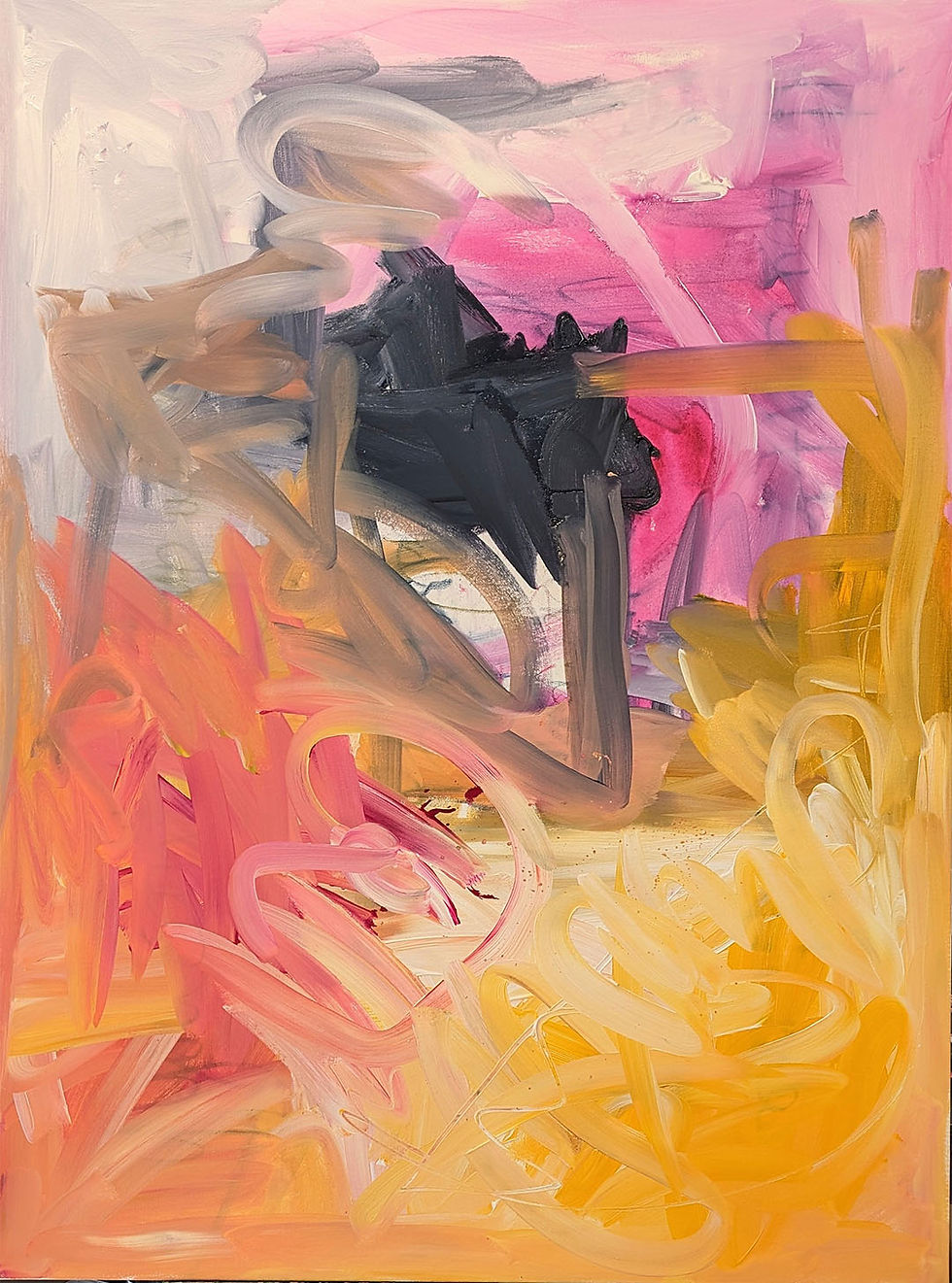
Q: Do you feel like your recent work is more about softness or assertion—or something in between?
A: Because my work centers on women experiencing a rich and layered emotional landscape, it doesn’t exist on a binary scale of softness or assertion. It lives in the tension between the two. The assertion may feel more intense now because it was hidden for so long, but my practice is really about allowing both to share the canvas, letting them challenge and soften one another.
I often begin each piece by settling into a specific emotional current. I let it guide my body, my rhythm, my gestures. But inevitably, other emotions rise up—memories, phrases, layered truths—and they make their way into the work. Sometimes they’re painted over, sometimes they remain visible. But even when they’re obscured, they shape the final image. Just like in life, it’s the nuance that tells the real story.
We rarely feel one emotion in a vacuum. Rage may carry heartbreak inside it. Grief may brush up against joy. As I continue developing this collection, my work is becoming less about isolating a single emotion and more about letting them coexist. I want to allow acceptance to dance with sorrow, let love mingle with rage. I want the paintings to reflect the emotional truth of how we move through relationships with others and with ourselves and let them settle into the complexity of that ever-shifting landscape that is our heart.
Q: How has your healing process shifted the way you approach making?
A: I always say that painting found me—that it kept creeping back into my life until I finally relented and allowed myself to become the artist I was already becoming. In the beginning, painting offered a gentle way to connect with my emotions. It was subtle, soft, and often subconscious. I didn’t need to name what I was feeling; I could just move color and shape and let that speak for me.
But as my healing deepened, so did my approach to creating. I became more conscious of the emotional territory I was moving through in the studio. The work stopped being just expressive and it became reflective. My collections started to feel like personal milestones—visual records of what I had faced, what I had learned, what I had reclaimed.
With the Wild collection, that shift became intentional. I began seeking out the emotions I wanted to explore, not just waiting for them to arise. I started listening more closely to the stories of other women—stories of grief, rage, awakening, surrender—and reflecting on how those same currents ran through my own journey. My process became an active practice of empathy, emotional witnessing, and sometimes even transmutation.
I’ve come to see part of my role as an artist as being an emotional translator, offering visual language to those who don’t yet have words for what they’re feeling. And as my healing journey continues, I find I’m less afraid of what I might encounter in the darker spaces. I understand now that emotions are fleeting if we don’t cling to them, and that the shadow has deep wisdom to offer if we’re willing to sit with it.
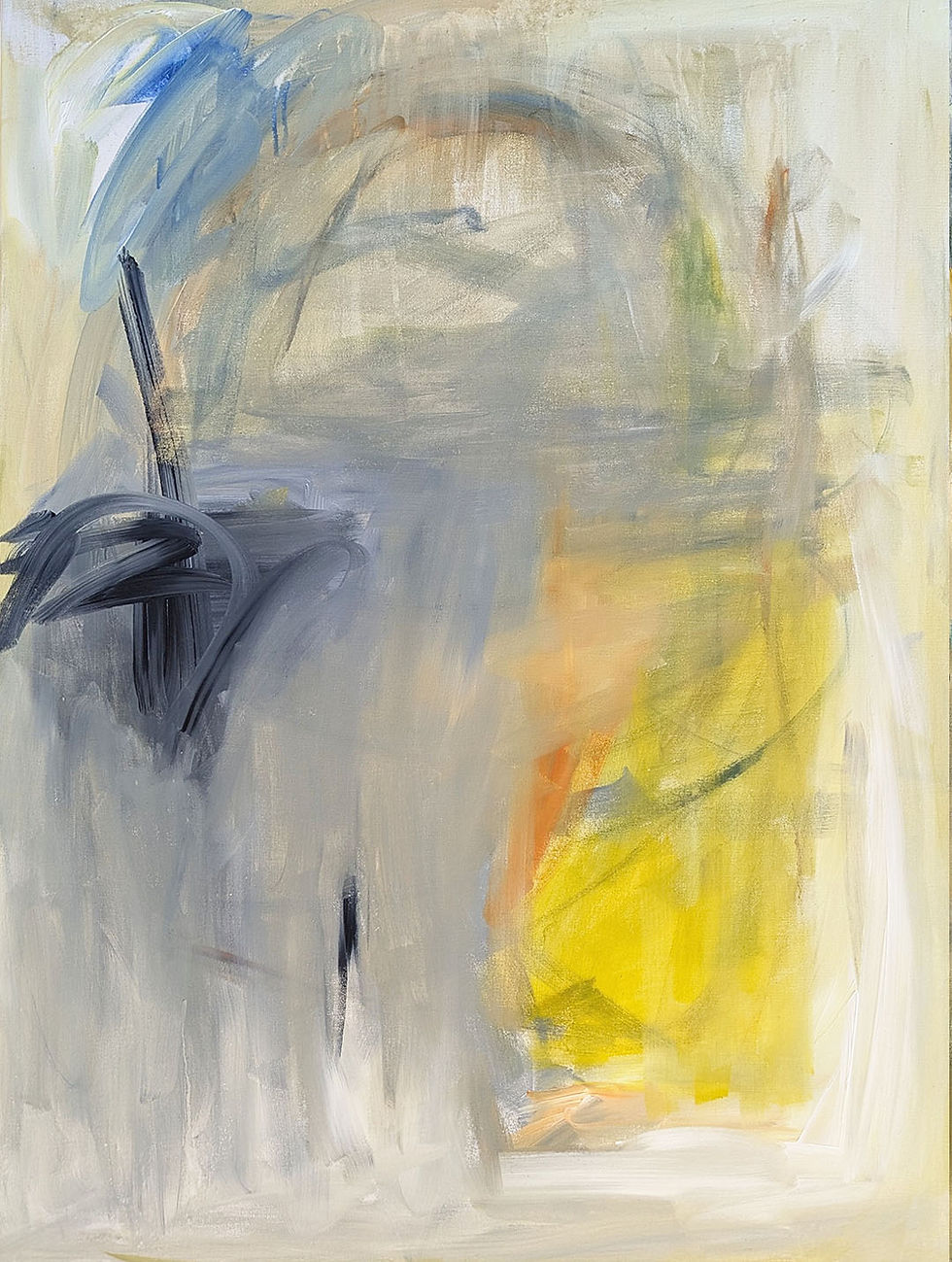
Q: Do you paint with the viewer in mind, or is it more for yourself?
A: In the early months of the pandemic, I took long walks with my children every day. The streets were empty—no cars, no people, just silence. It was disheartening, surreal. I remember feeling this aching need to signal life—so I began hanging a painting on my front porch, switching it out every few days. It became my small rebellion, a quiet offering to the world: a reminder that beauty still existed, that life was still moving, even if everything felt paused.
As spring arrived, I started sitting outside. People began stopping by—not to chat, but to thank me. Some told me they changed their walking routes just to see what I had hanging that day. They said it gave them hope.
That changed everything for me. I still paint from within—my studio is a space where I strip down to my own truths, where I follow my perspective as honestly as I can. But the moment the work leaves my hands, it belongs to the world. I make it for those walking past, for those searching for resonance, for those who need to be reminded that sadness and rage, joy and bliss, beauty and mess—all still exist.
This is my way of giving back. It’s not just what I can do—it’s what I must do.