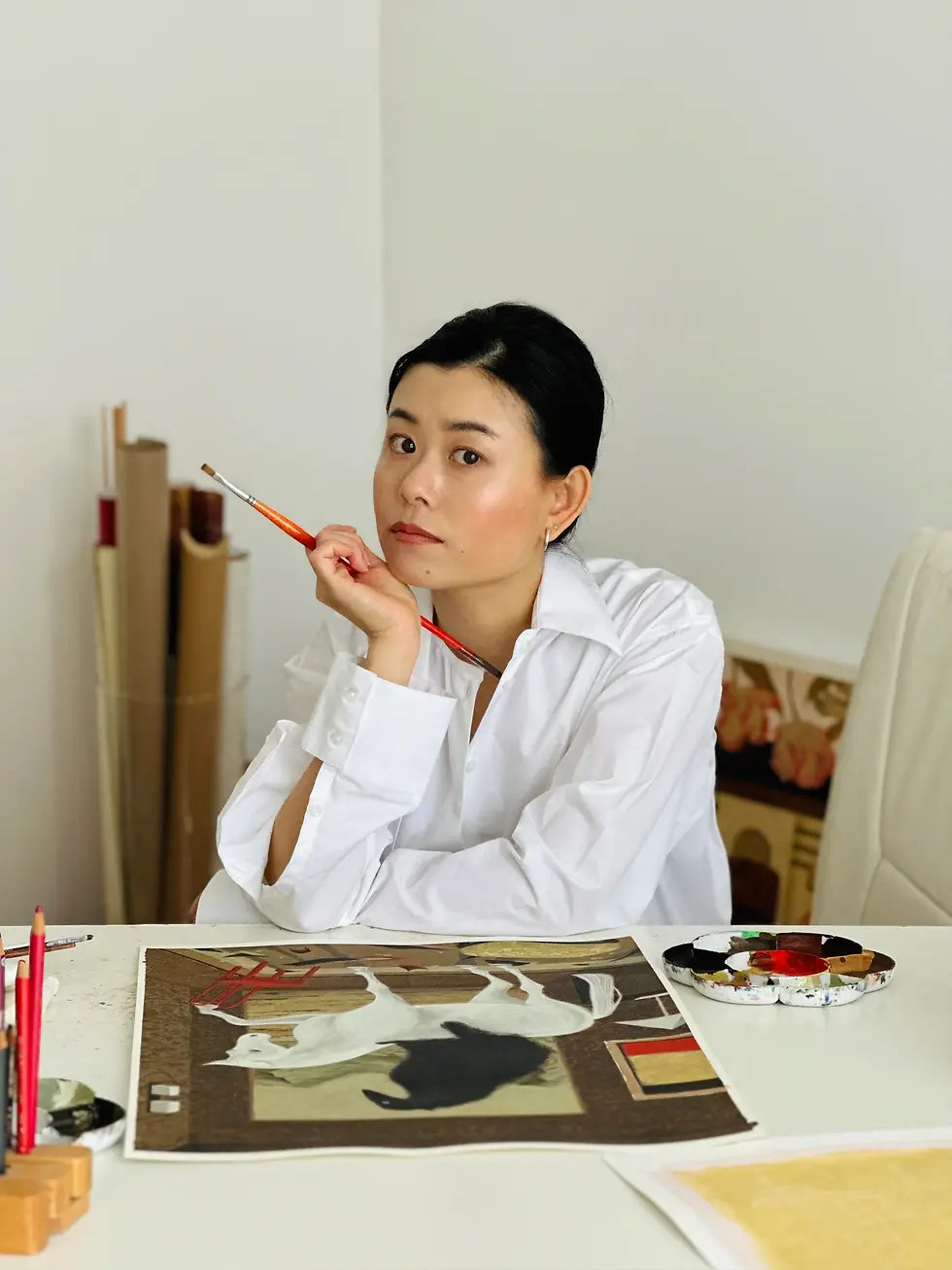
Julie Gillis
Julie Gillis is an illustrator and designer based in New York City. Growing up in Seattle in a Chinese-American family, she developed an early love for images and storytelling. Her work combines hand-drawn elements with digital collage, mixing personal memories with design precision. Everyday scenes, family stories, and cultural references often find their way into her compositions. Pieces like "Cloud Collection" and "Sweet Tooth" show her sense of humor and warmth, turning small details into relatable moments.

Q: You mix design and illustration so naturally. When did those two start feeling like one language for you?
A: Design and illustration started to feel like two sides of the same coin while I was studying at Pratt. I came into the Communication Design program with my heart set on illustration, so when I was asked to dive into graphic design, I resisted. It felt unfamiliar and rigid, not at all like the expressive work I was used to.
Things changed when I took a class with Professor Xinyi Li. Her way of teaching design was thoughtful and inspiring, and it helped me see graphic design in a completely new light. I began to understand that design wasn’t just about structure; it was just another tool for communication and storytelling, just like illustration. That realization really stuck with me.
I didn’t want to keep those two parts of myself separate. It felt more natural to let them inform each other. So I started blending them, letting my illustrations bring warmth and personality to my design work, and using design principles to give my illustrations clarity and purpose. Over time, they stopped feeling like two different skill sets. They became one voice, one way of seeing and creating.
Q: Your Chinese-American background shows up in subtle ways. How do you decide what parts of that heritage to bring into your work?
A: My work has always been pretty explicitly Chinese-American. I feel comfortable being direct about my identity because it’s a big part of the way I see the world and how I make art. I can pull from my personal experiences, family history, and cultural symbols that are familiar and meaningful to me.
I don’t really separate my heritage from my practice. It’s more about choosing which stories or moments I want to focus on. I think being explicit gives me space to explore identity in a way that feels honest and layered, and hopefully invites others to connect with it too.

Q: Color and texture feel central to your style. Do you start from a story or from a visual idea?
A: I almost always start from a story. Having a clear narrative or concept helps me anchor the visual choices I make; it gives the work direction and emotional weight. My process involves a lot of research, whether that’s diving into cultural histories (my own or ones I’m unfamiliar with), exploring symbolism, or gathering visual references that help me build a richer context.
Color and texture are central to how I express those stories. That connection comes from my background in fine arts. In high school, I spent a lot of time working with graphite and oil paint, and I fell in love with the tactile quality of traditional media. When I transitioned into digital art, I found myself missing that physical texture, the depth, imperfections, and the way materials interact with each other. So I started incorporating texture intentionally into my digital work. It’s my way of grounding the piece, giving it a sense of presence and warmth that feels true to my style.
Q: You mention memory and identity as recurring themes. What keeps you coming back to them?
A: I keep coming back to memory and identity because they’re deeply personal. They help me process my own experiences and make sense of where I come from. It’s a way to stay connected to my family, culture, and past.
Exploring identity through my work also helps me ask questions I might not have answers to yet. It’s not just about defining who I am, but about reflecting on how that identity shifts over time and in different spaces. I think that’s why I keep returning to these themes, they’re never static, and they always lead me somewhere new creatively and personally.
Q: Collaboration seems to matter a lot in your process. What have you learned from working with others?
A: Collaborating with peers, friends, and mentors has been invaluable in expanding my creative approach. Through these interactions, I’ve learned techniques that go beyond illustration, like design thinking, sequencing, and storytelling, that have helped me grow as a multidisciplinary artist. My background in graphic design taught me how to compose scenes more intentionally and choose cohesive color palettes, which I now apply across my work.
I also create zines and artist books, which allow me to combine my love for both art and design in a tactile, narrative format. One of the most impactful lessons came from a professor with a background in film. From him, I learned to apply more cinematic techniques, such as wide shots, close-ups, and visual pacing, to make my illustrations feel more dynamic and immersive. Working with others has taught me to see my work from different perspectives and to be more intentional in how I communicate visually.

Q: Outside the studio, what kind of things spark your curiosity or feed your creative side?
A: Outside the studio, I get a lot of creative energy from just stepping away from my screen. I’m big on hiking. It’s my go-to way to reset when I’m feeling burnt out. Being out in nature and away from a screen helps clear my head and gives me space to think without pressure. It’s kind of like hitting a mental refresh button. I also love watching films. I’m always paying attention to how scenes are framed or how stories unfold visually, it definitely influences how I approach my own work, especially when I’m thinking about pacing or composition in zines and artist books.
Talking with friends is another big one. Some of my best ideas come out of casual conversations or just bouncing thoughts around with people I trust. And I try to visit museums and galleries whenever I can. Seeing other artists’ work in person always sparks something new. It reminds me that there are so many ways to tell a story or express an idea. All of that feeds back into my practice in ways that feel natural and energizing.