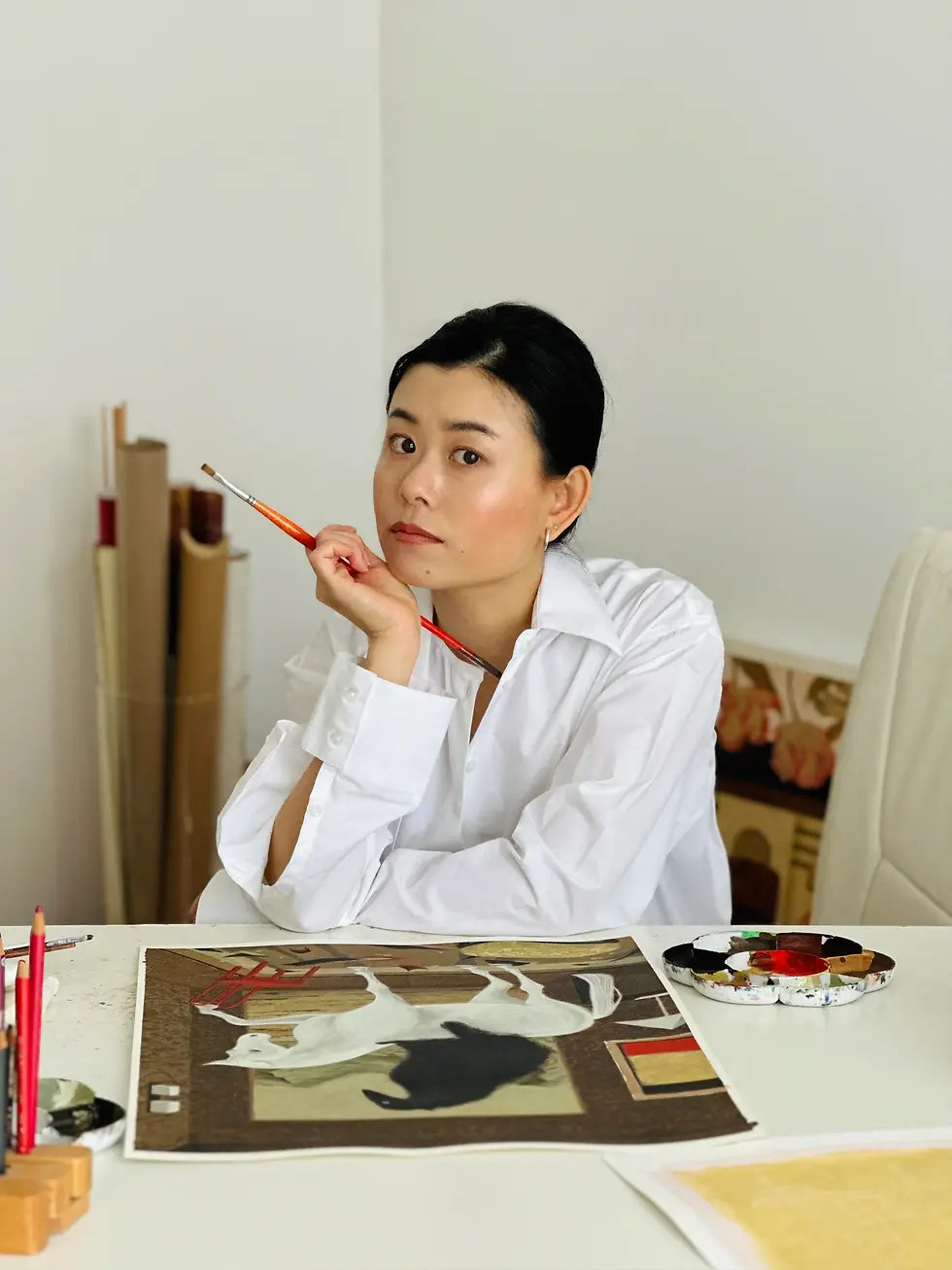
Jiaxi Zhang
Jiaxi Zhang is a visual artist based between London and Shanghai. She works with textiles, installation, film, and printed formats, and often starts from everyday situations around care, closeness, and being with others in a shared space. Soft materials, sound, and simple structures are part of how she builds her projects. She thinks a lot about how a room is entered, how sound and fabric are felt, and how long someone chooses to stay.

Q: What first drew you to working with sensory and embodied forms of communication?
A: I was drawn to sensory and embodied forms of communication because they allowed me to stay with things that didn’t want to be explained too quickly. Early on, I noticed that some experiences — especially those tied to care, loss, or intimacy — lose something when translated directly into words. Working through materials, textures, sound, or bodily presence gave me another way to hold and process those experiences.
As my practice evolved, I became more interested in how meaning is felt rather than stated — how touch, rhythm, or proximity can communicate quietly but deeply. Sensory forms let me work at that threshold, where understanding happens through the body before it becomes language.

Q: Your projects begin with quiet questions. How do you know when one is ready to develop into a piece?
A: I know a question is ready when it stops leaving me alone. When it returns in different moments—through a sensation, a material impulse, or a recurring image—I take that as a sign that it wants form. It’s less about clarity and more about persistence.
Often, the moment of readiness comes when the question begins to suggest how it wants to be held: through touch, sound, space, or movement. When I can sense the conditions it needs to exist—rather than an answer it wants to give—I begin working with it. The piece grows from there, slowly, through making and listening.
Q: How do you decide whether a project becomes textile, film, installation, or something wearable?
A: I don’t decide on the medium at the beginning. I start with a question, a sensation, or a situation, and let the form emerge from how that experience wants to be encountered.
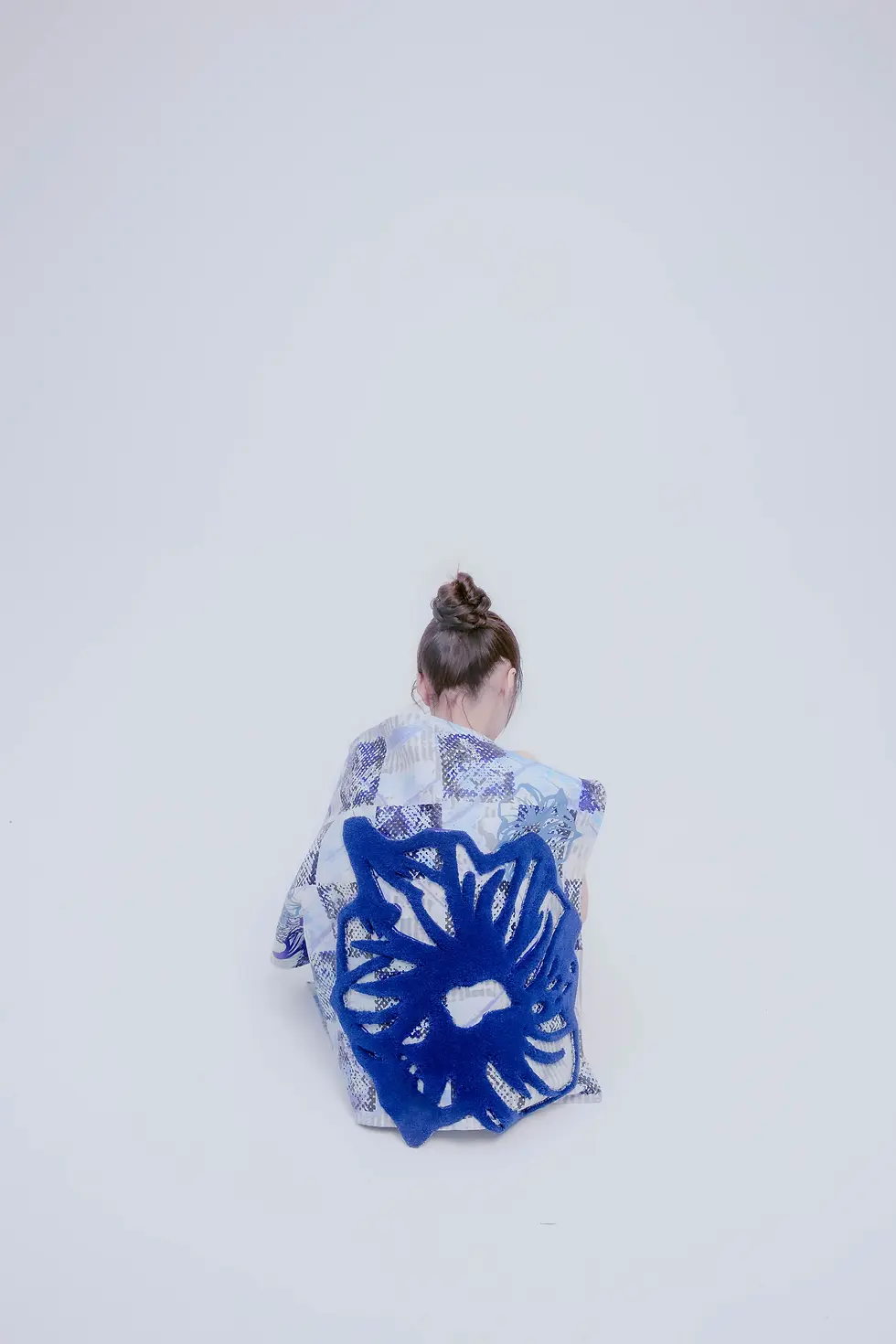
Different ideas ask for different kinds of closeness. If it asks for touch, weight, or bodily proximity, it becomes textile or something wearable. When a work needs to be entered, navigated, or shared in space, it takes the form of an installation.
So the choice isn’t about preference, but about responsibility—choosing the medium that can best hold the experience the work is trying to offer.
Q: You often build spaces of care through softness and tactile structure. What guides your material choices?
A: My material choices are guided less by preference than by listening. I pay attention to what a project asks for emotionally and physically—whether it needs warmth, resistance, fragility, or responsiveness.
I’m drawn to materials that can be felt before they are understood: soft surfaces that invite touch, flexible structures that respond to the body, or elements that change through interaction. For me, softness isn’t only an aesthetic choice—it’s a way of creating safety, slowing down attention, and allowing people to approach without instruction.
I also consider how materials behave over time and through contact. If a material can hold traces of interaction, wear, or care, it often becomes part of the work. In this way, material becomes not just a carrier of form, but a participant in the experience.

Q: In "Where’s My Shelter," sensory elements shape an experience around life and death. How did you approach creating that space?
A: I approached the space as something that needed to be felt before it was understood. Rather than shaping it all at once, I built it gradually—testing how scent, sound, texture, and proximity could work together without overwhelming each other.
I thought a lot about pacing and distance: how close someone feels invited to come, how long they might want to stay, and how the body moves through softness and sound. E
ach sensory element was introduced gently, allowing the space to unfold slowly rather than demand attention.
Instead of treating the installation as a single environment, I treated it as a sequence of small encounters. The goal wasn’t immersion for its own sake, but to create a quiet condition where presence could be held—especially in relation to themes of vulnerability, care, and being alive.
Q: What kinds of interactions or experiences are you most interested in exploring right now?
A: Lately, I’m interested in interactions that don’t announce themselves. The kind that sneak up on you—where you think you’re just standing there, and suddenly you realize you’ve slowed down, touched something, waited a little longer than expected.
I like interactions that are gentle and slightly awkward in a good way: brushing past a surface, lingering with a sound, not knowing exactly what you’re “supposed” to do. Those small hesitations feel honest to me.
Right now, I’m less excited by big reactions and more curious about quiet shifts—moments where the work doesn’t ask you to act, but simply invites you to stay. If someone leaves thinking, “Oh… I was part of that,” even without knowing how—that’s my favorite kind of interaction.