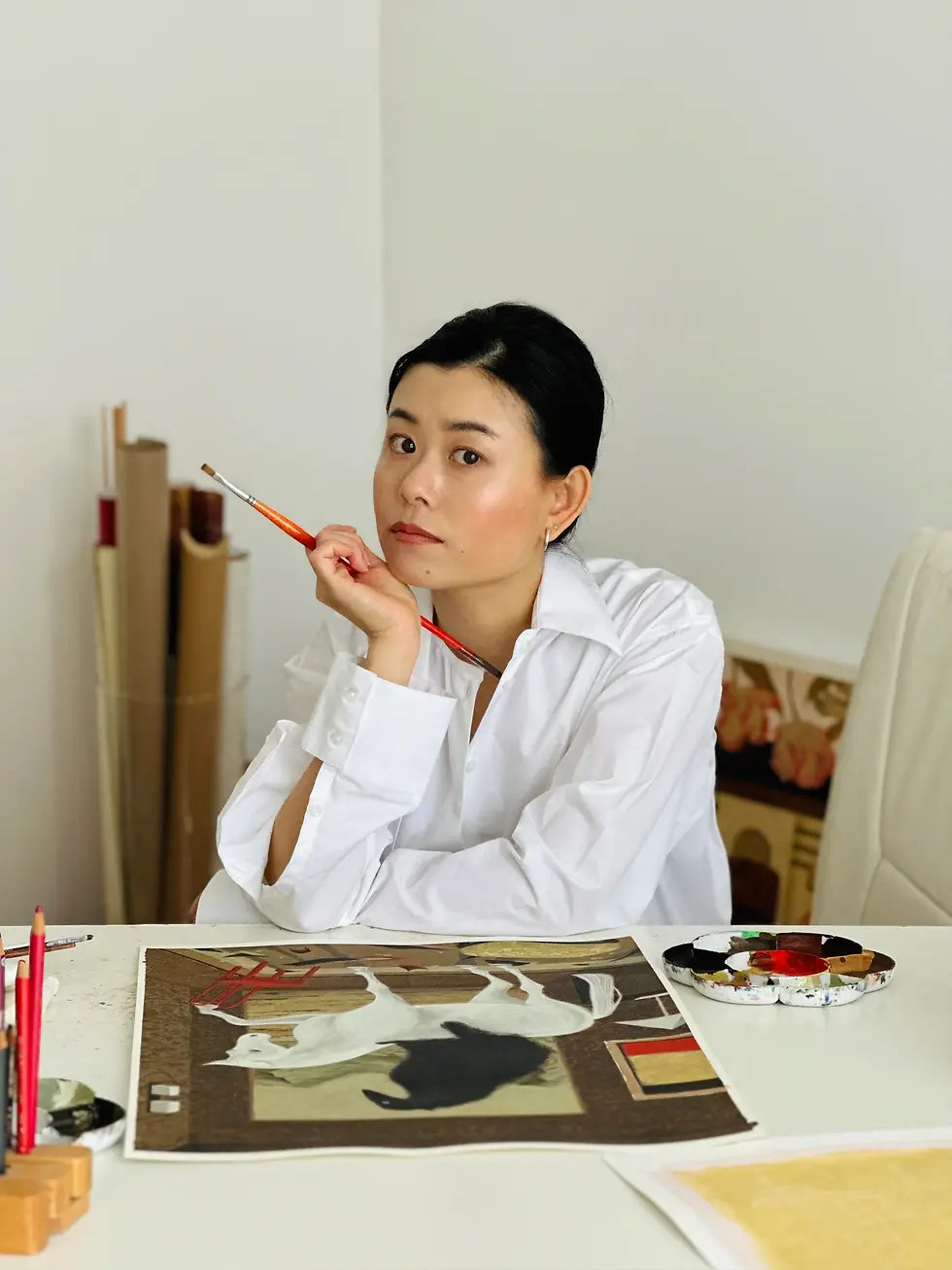
Diana Meridi
Updated: Jul 3, 2025
Diana Meridi works with video, often using quiet scenes, repetition, and slow rhythm. Her pieces don’t follow a clear story but focus on small gestures, moods, and the feeling of being watched. She often uses symbols like eyes or hands, which return in different works. Language plays a role too, both as sound and structure. Her videos create a calm, closed world where every detail feels intentional. It’s a practice based on presence, attention, and the space between what is seen and what is felt.
Q: You often speak of “the invisible.” What draws you to this idea, and how does it shape the way you work?
A: I’m drawn to what exists beyond the visible – emotions, memories, subconscious codes shaping our choices. My works are attempts to reveal these silent forces, to make viewers feel them rather than just see images.
Q: The recurring presence of eyes and inner beings gives your videos a dreamlike quality. What do these figures mean to you?
A: The eye is a universal symbol of perception, knowledge, and the soul’s awareness. For me, it also holds the idea of being seen by something greater than ourselves – nature, the cosmos, collective memory.
Q: Movement and stillness are both central in your video works. How do you think about time when you’re creating?
A: I treat time as a breathing space within the work. Movement reflects inner shifts, while stillness creates openings for deeper contemplation. Together they form the rhythm of presence.
Q: What made you choose video as your main medium? Was there a turning point that led you to it?
A: Video felt like the natural extension of my drawings and collages. It adds dimension, sound, and temporality. The turning point was realising I could build entire sensory worlds through moving images.
Q: Your settings often feel intimate, yet slightly detached from reality. How do you choose your locations, and what role do they play?
A: Locations for me are emotional landscapes. I choose spaces that hold silent stories or atmospheres that resonate with the inner narrative I’m building.
Q: There’s a quiet tension between the real and the imagined in your work. How do you navigate that space when developing a piece?
A: I work intuitively between reality and dream, weaving them into layered visual poems. I never fully resolve that tension; it’s what keeps the work alive.