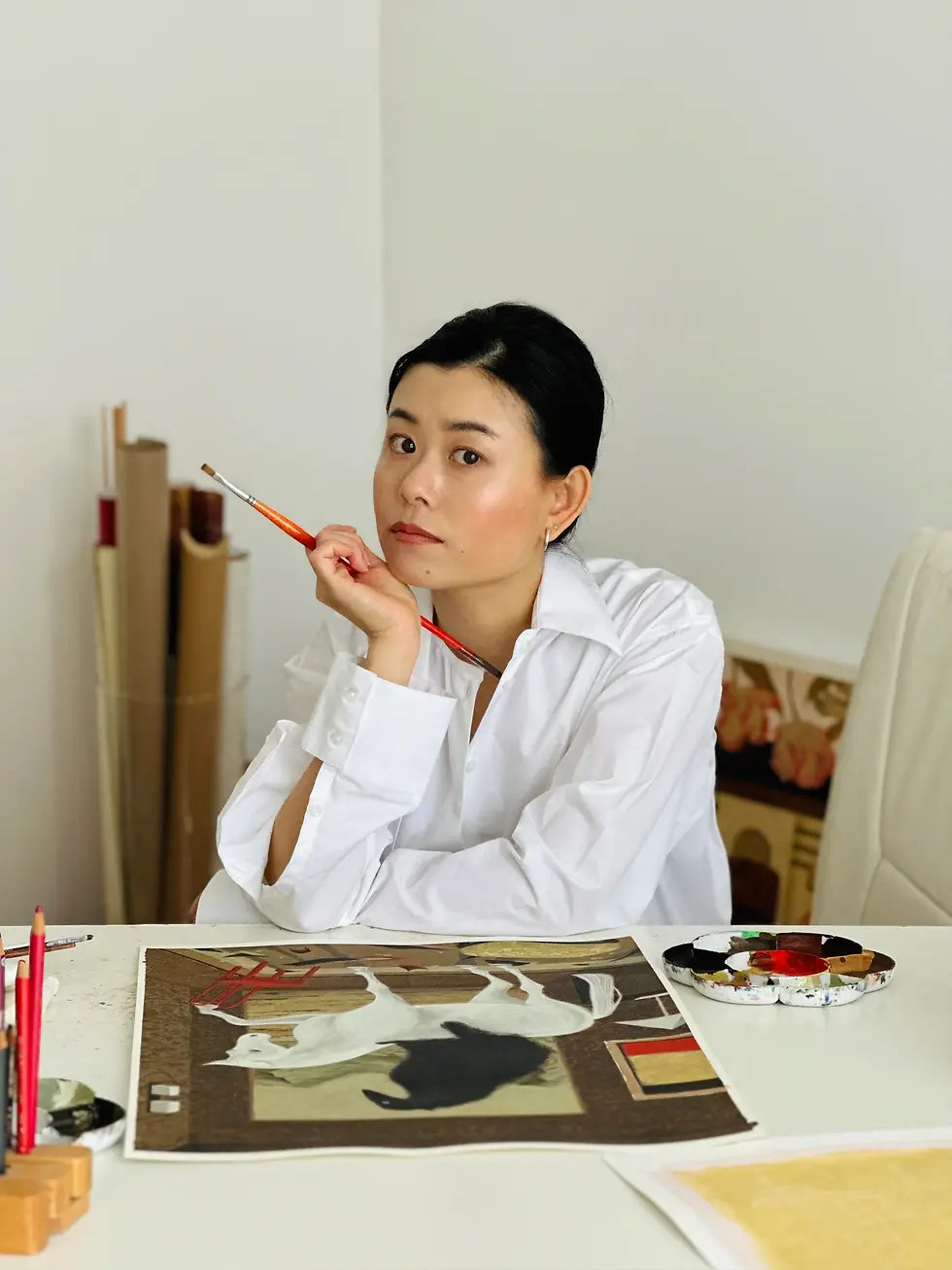
Carlotta Hey
Carlotta Hey is an Australian artist working across painting and illustration. With a background in fashion design, she often focuses on clothing, the body and everyday gestures. Many of her works show people in quiet moments, drawn through subtle poses, layers and textures. Her series "Outer Wear" looks at garments and the ways they shape how we carry ourselves. Clothing appears both as surface and structure, returning throughout her drawings and painted figures.

Q: In your series "Outer Wear" you treat clothing as both comfort and armor. When did that way of seeing garments first take hold for you?
A: I have always been fascinated by the idea that clothing can act as "another layer" of identity. Each piece has its own narrative, capable of reflecting our inner selves while also influencing our outward expressions.
I recall instances when simply donning a particular outfit transformed someone's demeanor, highlighting how clothing operates on a deeper psychological level, shaping our interactions and perceptions.
I recognized early on that clothing not only offers physical protection from the elements but also emotional safety and security.
This dual role became particularly evident in moments where the right outfit could change how I felt about myself or how others perceived me. Garments can serve as a shield; they provide a sense of armor against the uncertainties and vulnerabilities of life.
This layered understanding of fashion and its impact is what ultimately inspired my series "Outer Wear," allowing me to explore the intricate relationship between garments and the human experience.

Q: After two decades in fashion, what made you feel it was time to shift your focus toward fine art?
A: Several factors actually played a role in this shift, and it has not come without its challenges. Firstly, I must admit that I am still working freelance—I think once you are in this industry, it's hard to leave. It becomes part of your identity; it’s who I am.
However, I can’t ignore the fact that the industry has changed significantly, and so have I. As I observed the fashion landscape evolving, I felt a growing disconnect with the creative processes that once inspired me. The focus on fast fashion and the pressure to produce rapidly often overshadowed originality and innovation.
I began to realize that my core values of creativity and authentic expression were being compromised in favor of trends and profit-driven motives.
This realization prompted me to reassess my place within the fashion world.
While I appreciate the experiences and foundations built over the years, I wanted to go back to explore art as a means of personal expression and storytelling without the constraints that often accompany the commercial side of fashion.
Shifting to fine art allows me the freedom to delve into themes that resonate with me. It’s the perfect opportunity to reclaim my creative vision, push boundaries and encourage a bit of risk-taking.
Q: Your muted palette feels very deliberate. What does working with such restraint allow you to do?
A: A sense of clarity! By limiting the colour spectrum, I invite viewers to engage more thoughtfully with the piece, so they can focus on the subtleties of texture, light and shadow.
This approach encourages a moment of pause, where the viewer can reflect on the interplay between the clothing and the emotions it represents, rather than being overwhelmed by a riot of colours. I deliberately use a muted palette to highlight the themes of vulnerability and strength that permeate my work. By stripping away visual noise, the artwork encourages a deeper connection to the underlying narratives of resilience and protection inherent in clothing.
Ultimately, working with such restraint not only amplifies the tactile sensations of the materials but also captures the complex emotions that coexist within each individual, allowing for a profound exploration of identity and perception in a fragmented world.
Q: The wrapped figures in "Outer Wear" seem both protected and vulnerable. What draws you to that tension?
A: I find it fascinating how clothing can embody both strength and fragility, acting as a physical representation of the inner battles we all face.
This duality mirrors the complexity of human experience, reflecting how we often navigate our identities in a world filled with both comfort and risk. I am drawn to this tension because it resonates with the reality that we all face—where the very things that shield us can also highlight our fragility.
The wrapped figures in "Outer Wear" symbolize how clothing can create a sense of safety and comfort, providing a protective barrier against external influences and emotional uncertainties. Yet, within that layering lies the acknowledgment of vulnerability; the very act of being wrapped can evoke feelings of confinement or isolation. This juxtaposition invites viewers to explore the nuanced relationship between the desire for security and the fear of exposure.
This tension allows for a richer narrative in my work, engaging audiences on multiple levels—inviting them to reflect on their experiences of protection and vulnerability. It serves as a reminder that we all wear our own forms of armor while navigating a world that often feels overwhelming.


Q: How do you think years of working with the body in fashion shaped the way you now portray it in your art?
A: In the fashion industry, the body often serves as a means to an end—the primary focus is typically on the presentation of the designed clothing and achieving its optimal effect. This approach can inadvertently reduce the individuality of the body, as clothing sizes frequently divide bodies into categories or groups, prioritizing uniformity over uniqueness.
But in my artistic practice I try to engage as deeply as possible with the body; I pay close attention to posture, facial expressions, and the subtle ways in which the body communicates emotions and narratives. This focus has fostered a heightened awareness of the importance of individual body image, allowing me to celebrate the diversity and complexity inherent in human forms.
In my art, the body becomes a powerful vessel for storytelling, capable of conveying a range of feelings and personal experiences.
Q: When you return to wrapping and layering again and again, what keeps that gesture alive for you?
A: Each exploration of wrapping and layering offers an opportunity for experimentation with texture, form, and colour. This ongoing process of discovery enables me to innovate within my practice while remaining connected to the thematic core of my work. Ultimately, the gesture remains compelling because it reflects the depths of the human experience, prompting me to continually engage with the ways we navigate identity, emotional expression and our interactions with the world around us.
Wrapping signifies a desire for shelter and safety, while also highlighting the nuances of personal identity. By layering, I emphasize the idea that we often carry multiple facets of ourselves—some visible, others shrouded in fabric.
Additionally, the act of layering and wrapping can be seen as a metaphor for the experiences and emotions that accumulate over time. It captures the intricate balance between strength and fragility, illustrating how our protective measures can both shield us and signify our vulnerabilities. This duality keeps the gesture dynamic and relevant, as it continually resonates with the complexities of contemporary life.