Aurelia Karina
Aurelia Karina is an illustrator and visual designer based in Jakarta who works mainly on an iPad in Procreate. Her drawings often feature exaggerated, curvy bodies inspired by plus-size yoga figures, with bright color and a gentle, emotional mood. She builds her images through sketching and adjusting forms until they feel right, using the body and color to share feelings she finds hard to put into words. Much of the work comes from everyday inner states and small, personal moments.

Q: You started with drawing as a childhood hobby. At what point did it begin to feel like something more serious?
A: It took a long time for drawing to become serious for me. It all started when I failed my high school exam and had to repeat a year. I dropped out of high school early to study visual communication overseas instead of staying until graduation. I chose this major because I was bored with drawing at the time and curious to learn something new. During college, I had to put drawing aside because I believed it wasn’t something I should prioritize professionally, and I wanted to focus on my graphic design skills.
From my experience, graphic design students with a strong interest in drawing were often discouraged, as it was seen as more appropriate for multimedia or animation students. In 2022, after eight years working as a full-time graphic designer, I realized I had slowly become uninterested in the things I had originally done for a living. That was when I discovered that my true passion is drawing and decided to pursue illustration full-time. This urge grew stronger after I got my first iPad and started learning digital illustration with Procreate. Interestingly, five years prior, I had been manifesting exactly this—to switch to digital illustration and improve my drawing skills—and my wishes were finally granted.

Q: You began with traditional tools before moving to digital drawing. What changed for you once you started working on an iPad?
A: I’ve always wanted to draw digitally just like the other illustrators I’d seen online—many of whom were Procreate users. After seeing their incredible artwork, I had to admit I envied them, in the best way. It tempted me to buy an iPad and start drawing on it. Obviously, the first thing you notice when you switch to digital illustration is that you use less paper, pencils, and marker pens, which I barely touch anymore because I do all my sketches directly on the iPad. I no longer needed stacks of paper, markers, or sketchbooks; all my ideas could live and evolve in one place. Once I started working on an iPad, it fueled my passion even further. It helps me improve my drawing skills, adapt to digital media, and stay up to date with design and illustration trends. At the moment, I’m juggling freelance graphic design, building my illustration portfolio, seeking wider exposure through exhibitions, competitions, and features, and working toward representation with an illustration agency. I’m also interested in exploring animation as a way to give my artwork another dimension.
Q: You describe yourself as introverted. What does drawing make easier to express for you?
A: I’ve been introverted and socially awkward since I was young, and I’m not always good with words. I tend to observe people, energy, and environment, so it’s often a challenge for me to express myself and explain how I feel to others. This can make me upset because I sometimes feel like an outcast, and when insecurities get the best of me, I keep wondering whether I can connect with other people and overthink what they would think of me.
Through art as an outlet, I’m able to explore and express emotions, thoughts, and questions that I choose to hold on to. Using vibrant colors and playful forms, drawing helps me process experiences and connect with others without needing to say too many words out loud. Drawing also allows my imagination to grow and lets me genuinely be myself. When I look at my artworks, it feels like I have another entirely different personality that I want to show the world on purpose. I love the idea of this duality: the introverted, private person and the bold, playful, quirky artist coexisting and completing each other.

Q: Your work is shaped by modern Japanese illustration and plus-size yoga videos. What stayed with you from those images?
A: From modern Japanese illustration, I was deeply influenced by its bold colors and attention to detail. There is a strong sense of clarity and emotional depth in its visual language—how an image can feel playful yet thoughtful at the same time—which continues to resonate with me and shape the way I compose my work.
It began around 2018, when my mom shared many videos of plus-size yogis to encourage me to work out and live a healthier lifestyle. She also suggested that I draw these plus-size yogis in my own style and post them on social media. Eventually, those videos caught my attention, and I slowly adopted a curvy, disproportionate drawing style for human figures, incorporating it into my artwork to this day.
Before that, my original style of drawing the human form was slender, tall, and fair-skinned. As I mostly drew female characters, I followed conventional beauty ideals reinforced for women. Over time, I started questioning what beauty really means and whether I truly resonated with the ideals I once believed in. I wanted to create something unique that does not adhere to social standards. My current style is a form of self-expression that celebrates difference and imperfection.
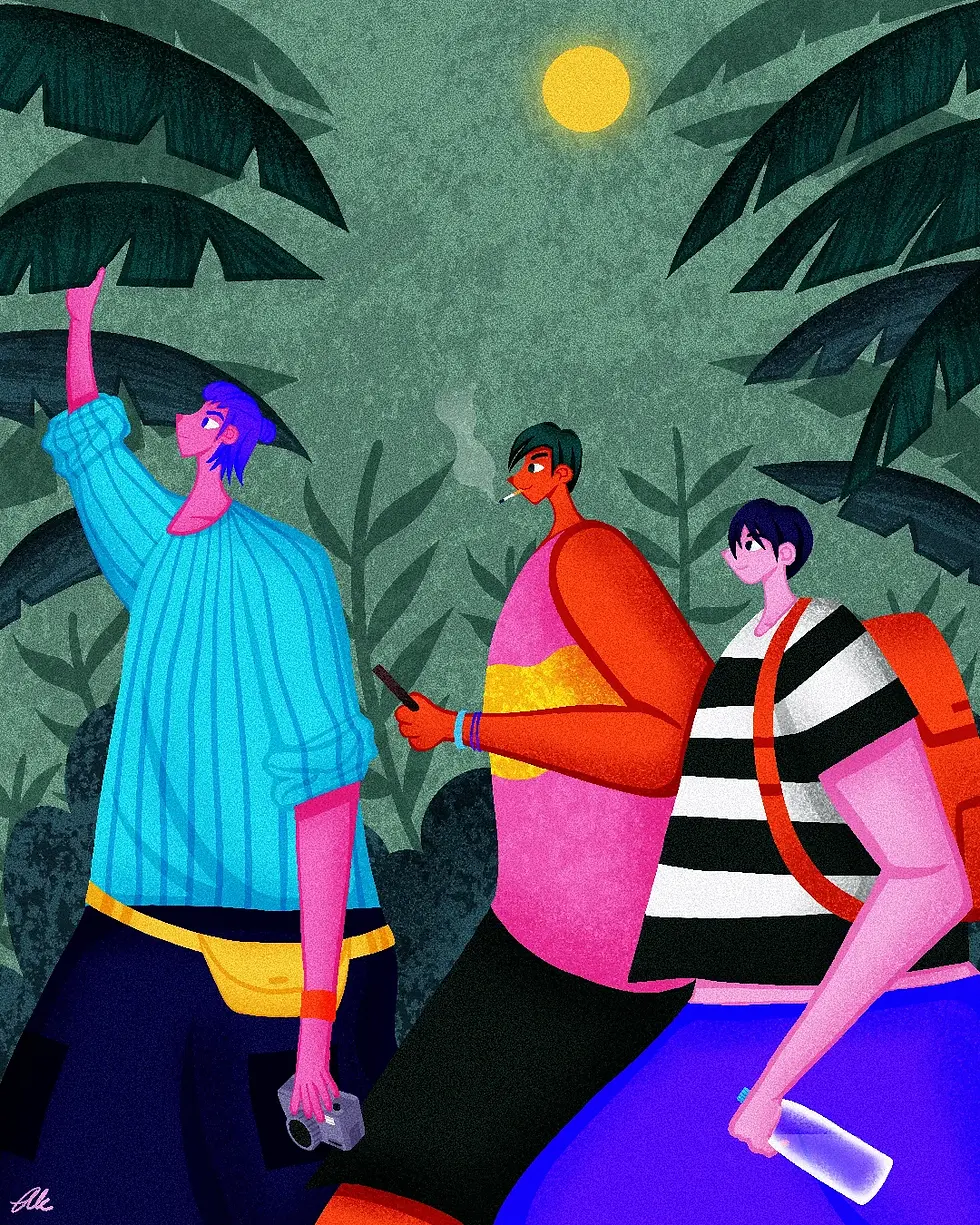
Q: How do you decide how far to push form and proportion in an image?
A: My personal project, "Fatty Human Series," explores vibrant, colorful, and intentionally disproportionate human characters, often with small heads and big bodies. Each illustration embodies different themes, ranging from nature and life to introversion and emotional states, reflecting my self-expression as an introvert through form, color, and feeling. During the sketching phase, I exaggerate body proportions intuitively to fit the concept and tone. The bigger the body, the better it looks to me. I occasionally make exceptions depending on the concept I’m working on; in closer or cropped compositions, I reduce exaggeration while still avoiding strict anatomical accuracy.
Q: After moving from office work to freelancing, how did your relationship to your practice change?
A: Working as a freelancer means both freedom and the opportunity to achieve work–life balance. Compared to full-time office work, there are fewer external expectations and less micromanagement. I have space to shape my own creative rhythm, follow my own rules, push myself out of my comfort zone, and learn to sit with uncertainty, which I’m still working through. Most importantly, I get to manage myself and allow my artwork to reach wider, global audiences, and that shift has fundamentally changed how I value and protect my creative voice.


