Blic
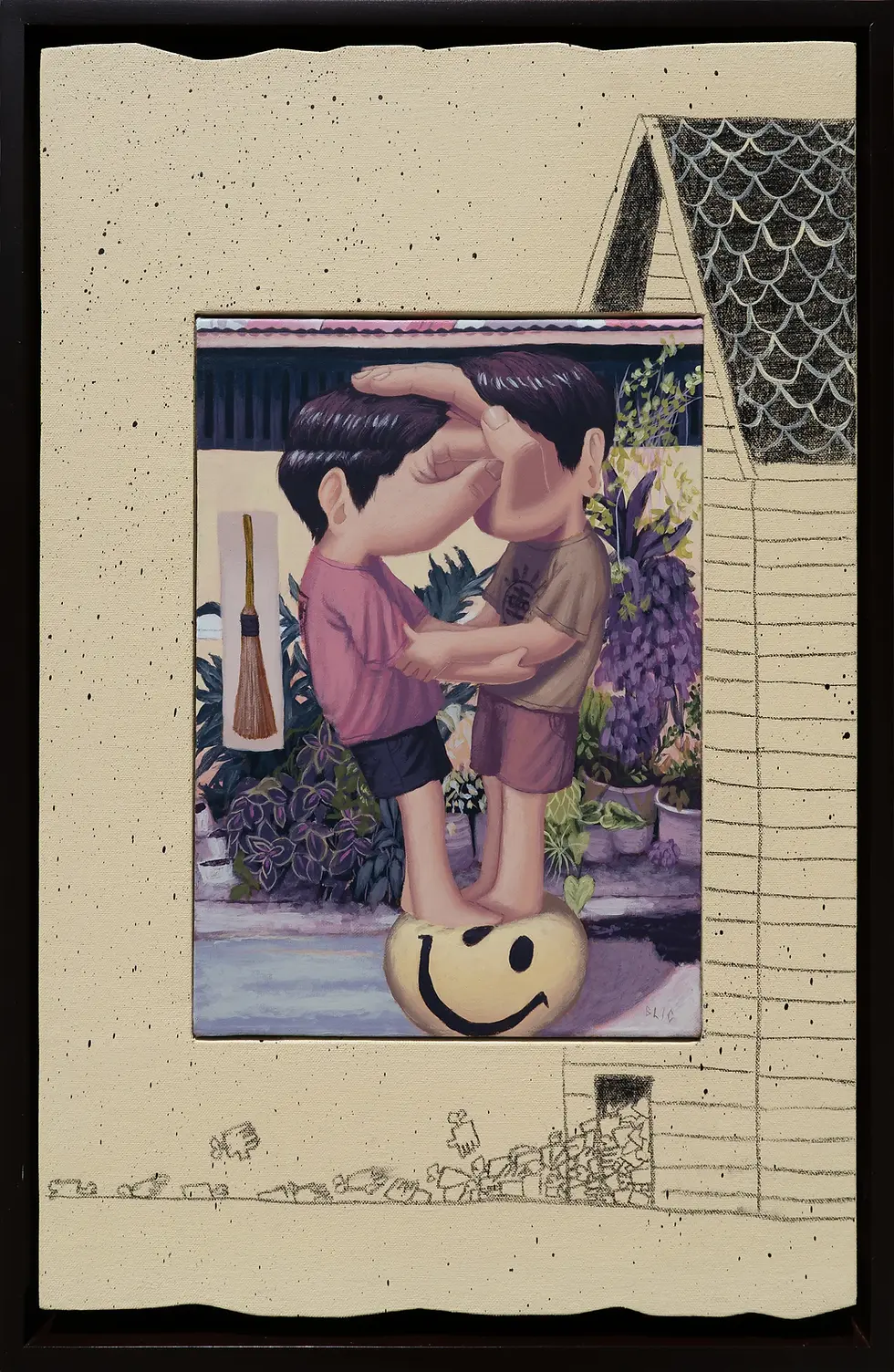
Blic is a self-taught visual artist and street muralist from the Philippines. He studied computer science but started painting after seeing murals around the country in 2009. His work is built around personified hands he calls humands, figures that started as graphic, cartoony creatures and grew into characters with full narratives. He has had solo shows with Dorothy Circus Gallery in Rome and London, with Thinkspace Projects in the US, and with Vinyl on Vinyl Gallery in the Philippines. He also paints large-scale walls and street murals.

Q: You came from Computer Science and you're self-taught as a visual artist. What got you into painting?
A: Seeing murals around the Philippines back in 2009 is really what sparked it for me and pushed me to try street art. It was still pretty new then—only about three years in the country—so everything felt like it was growing fast.
Street art is what got me into painting—the streets really taught me everything. The heat of the sun, carrying heavy cans of latex paint, and the artists I painted with during paint jams all shaped me. It was a very naive experience in the best way—just pure painting on walls—and that's what made me take it seriously.
Q: The hands are everything in your work. Personified, expressive, standing in for people. How did that visual language develop?
A: My early works were very graphic and cartoony, coming from a street art background. I was really drawn to the form of hands—I just thought they looked cool—so I started turning them into creature-like figures. As time went on and my taste in art matured, I began building narratives, and those "humands" slowly evolved from simple creatures into more personified characters.
In a way, that evolution mirrors my own journey—from not really knowing who I was to eventually finding my purpose as an artist. To me, humands represent exceptional people—those who can shape their environment, express emotions, and create a kind of language that resonates with others, just like our hands can do. And when someone is truly great at what they do, people tend to see them as different—almost like the humands I create.


Q: You've painted on canvas, paper, wood, concrete, walls. Does the surface change what comes out?
A: It's still pretty much the same—surreal scenarios, but with scenes that are somewhat readable. I think that's where my work shifts. Sometimes I'm in a mood where everything feels simple and almost "normal," and other times it gets really weird or surreal. But even then, it never loses that sense of being understandable. I stay in that space where it's strange, but you can still read something or feel something from it.
Maybe that's why some of my pieces are very simple—I want them to be accessible. Even someone who isn't really into art can still take something from it, even if the humands themselves are strange or unfamiliar.
Q: You have a long relationship with Dorothy Circus Gallery, three solo shows between Rome and London. How did that connection start?
A: There was a time when I applied to galleries abroad—I sent my work to around 15 galleries, and the only one who really noticed me was Alexandra Mazzanti Baldi, the director of Dorothy Circus Gallery. They've always been strong supporters of Asian and urban art, so I think that played a big role in how I got their attention.
My first show with them was a group show in July 2020, and from there it naturally led to solo shows and eventually an offer of representation in 2022. Since then, Dorothy Circus—and Alexandra—have become a huge part of my journey as an artist.
Q: Optimism and resilience run through everything you make. Where does that come from?
A: It still comes from personal experience, even if it sounds cliché. I didn't grow up in a wealthy environment—we're a working-class family.
I'd say we were still lucky, though, because my dad worked as a civil engineer abroad, an OFW (Overseas Filipino Worker), meaning he had to work in another country to support us. From a young age, it was already ingrained in me that I had to work hard to get through life, just like he did.
I learned to dream early, to want a better life. But I wasn't naturally hardworking right away—it really hit me during my teenage years, when I started to understand the realities of life. And when I found myself in the world of urban art, that's when something really ignited in me—it pushed that dreamer side of me even further.

Q: What are you working on right now, anything we should know about?
A: I have a solo show this August 2026 in Thailand with Joyman Gallery, and I'm really excited about it. It's one of those spaces that really fits my work—I feel at home with them. In this show, I want to really highlight my strength as a surrealist, but you can still expect that sense of meaning and emotion in the pieces I'll be creating. And of course, I'm still doing cellograffs and street murals, especially large-scale ones. I was able to complete two big murals in 2025, and I'm looking forward to getting another massive wall to work on this year.


