Meg Gallagher
- Mar 31
- 3 min read
Meg Gallagher is a New Zealand artist based in Dunedin who makes abstract works from old denim and other worn fabrics. She trained in fashion and worked in the industry for over a decade. She cuts up vintage pieces, stitches them together and then paints and dyes over them.
In our interview, we talk about what she kept from fashion, how she picks her fabrics, life in the south of New Zealand, and some recent smaller works using vintage leather.

Q: How did working with textiles first become part of what you do?
A: Textiles felt like a natural language for me long before I began thinking about making art. Through my background in fashion, I spent years working very closely with fabric, understanding how it behaves, how it absorbs colour, and how surface can shift through different treatments. When I moved into my art practice, working with textiles felt instinctive. Fabric already carries the evidence of a previous life, and I’m interested in extending that story rather than starting with something blank.

Q: You spent over a decade in fashion before moving into art. What stayed with you from that time?
A: Probably my deep love for material and vintage clothing. In fashion, you’re constantly observing how fabrics react, how they soften, fade, and change through time. That awareness has stayed with me and informs the way I approach surfaces in the studio. I also carry a respect for the craftsmanship behind textiles and the time it takes to develop a material properly.
Q: What makes you choose one piece of fabric over another?
A: It’s usually instinctive. I spend a lot of time laying different fabrics next to each other so I can see which tones and textures bounce off each other.

Q: Do you usually start from the material itself, or from an idea you want to build?
A: The material almost always comes first. I spend time laying out fragments of fabric until a structure begins to emerge. Once those pieces are stitched together, the painting evolves in response to that composition. It’s quite a fluid process where the materials guide the direction of the work rather than following a predetermined image.

Q: What draws you to the space where textiles and painting meet?
A: I’m interested in how the two disciplines complement each other. Textile brings tactility and history, while painting introduces gesture, colour, and atmosphere. When they intersect, the work sits somewhere between an object and an image. That ambiguity is exciting to me; the canvas stops behaving like a traditional painting surface and becomes something more physical and tactile.

Q: A lot of your process is slow. What tells you a piece is finished?
A: There’s a point at which I just know it’s complete, maybe it’s when my brain stops asking questions about it. Because the surfaces develop slowly with a lot of drying time, I spend a lot of time stepping back and observing before making the next decision.
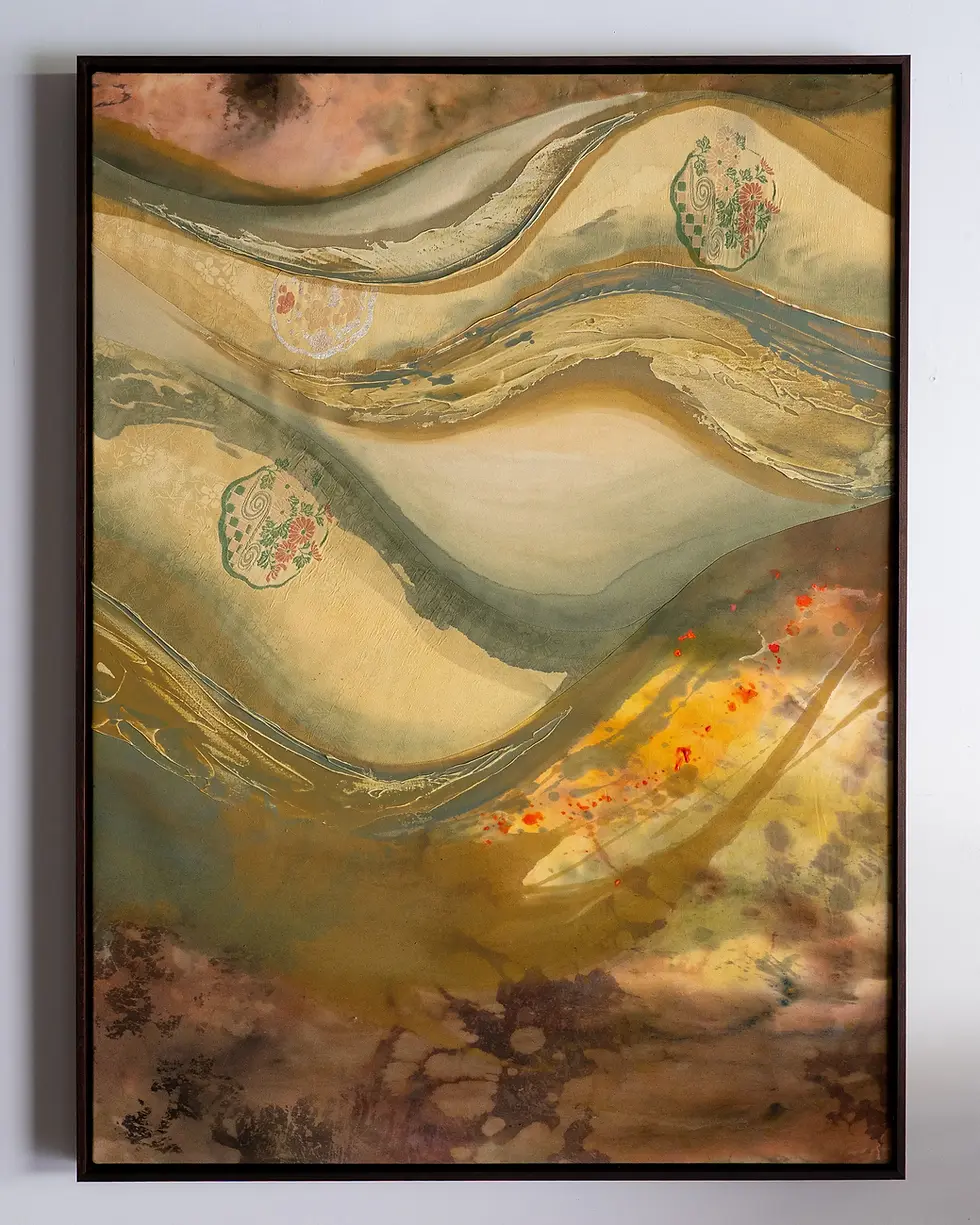
Q: You’re working from Dunedin, surrounded by nature. How does that environment shape your art?
A: Living in the deep south brings a strong awareness of landscape and atmosphere. The scale of the environment, the shifting light, and the proximity to the ocean all filter into the work in subtle ways. I’m not trying to depict specific places, but the feeling of being immersed in that environment inevitably influences the rhythm and mood of the compositions.
Q: What are you focusing on in the studio at the moment?
A: Right now I’m working on some smaller works, as my collectors have been calling out for this for quite some time. I have been collecting lots of vintage leather jackets from the ’70s, and so I have been blending these with my vintage denim. I’m interested in allowing the structure and history of the fabric to remain present rather than completely obscuring it. The collectors will be taking home a piece that, although it might be small, holds so much memory and life within it.