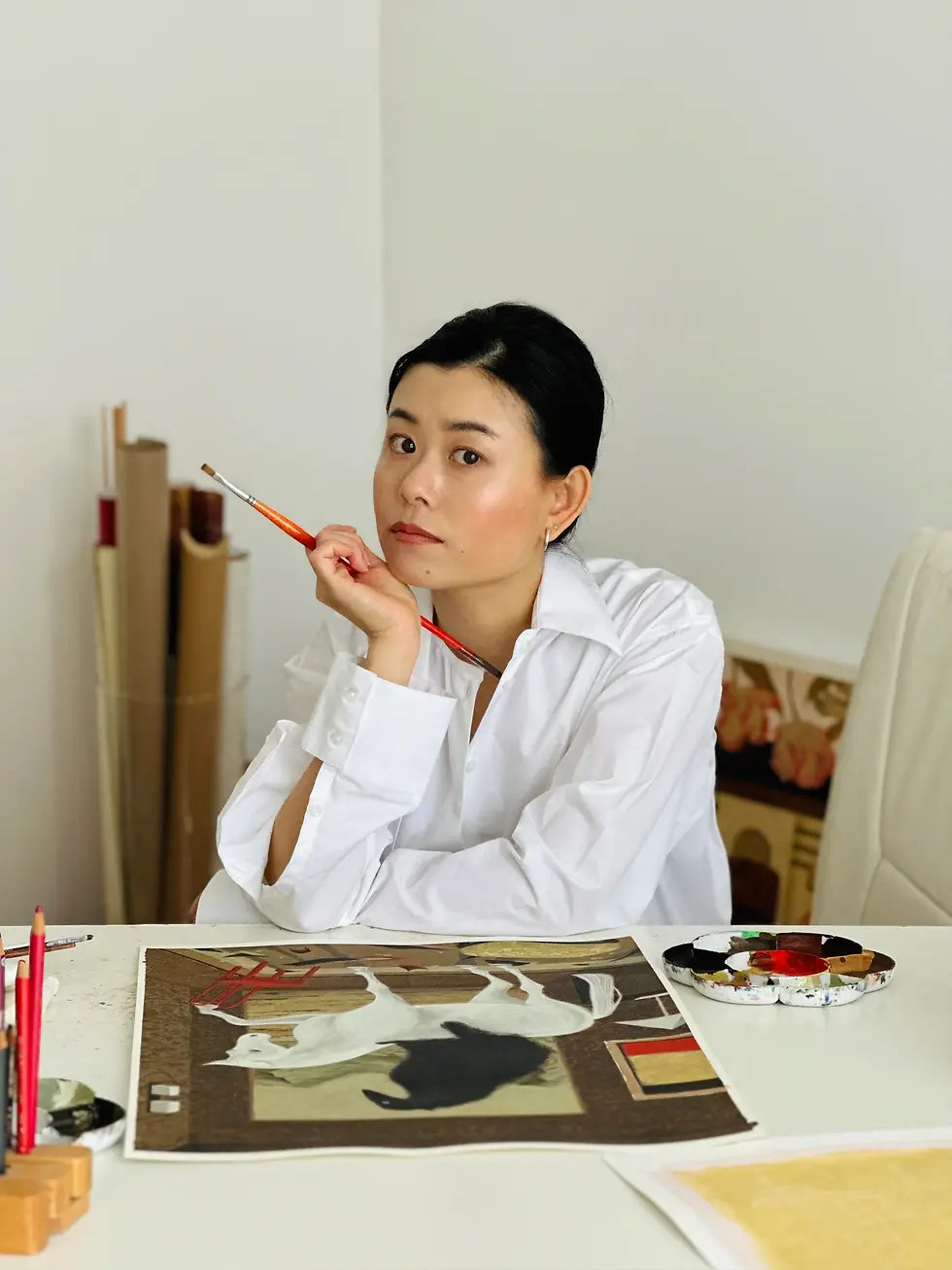
Vasiliki Velentza
Vasiliki Velentza is a Greek illustrator and graphic designer based in Athens. Her work reflects an interest in memory, repetition, and small personal gestures. She creates both digital and hand-drawn images, often combining techniques in a way that feels intuitive and quiet. Colour, line and form carry the emotion, while the subjects remain subtle and reflective. Scenes often unfold slowly, letting ordinary details take on their own kind of weight. Her approach is thoughtful and consistent, shaped by close attention to rhythm, mood and process.


Q: Your work often shifts between childhood memories and adult life. What makes that transition important for you to explore?
A: For me, that shift is where the tension really lives. Childhood feels like a space of freedom, play, and imagination, while adulthood often feels full of responsibility, structure, and weight. I’m interested in what happens when those two states overlap, how we carry our younger selves with us, how we lose them, and sometimes how we try to protect them. It’s a way of exploring both vulnerability and resilience.
Q: You use both hand drawing and digital illustration. How do you decide which approach feels right for a piece?
A: Hand drawing gives me immediacy and imperfection, it feels raw, emotional, very personal. Digital illustration allows me to refine that same language in a different space, to experiment with clarity and design elements while keeping a sense of playfulness. Usually, I choose based on the feeling I want to emphasize. If I need honesty and texture, I go to pastels and paper; if I want balance and precision, I turn to digital.


Q: Nostalgia, intimacy, and everyday rituals come back again and again in your practice. Why do these themes stay central for you?
A: They are the fabric of daily life. Nostalgia connects me to memory, intimacy connects me to people, and rituals keep me grounded. They’re quiet, sometimes overlooked, but they carry so much emotional weight. My work is about highlighting those small, human moments.
Q: You’ve said imperfection is part of your process. What do you think keeping the roughness visible adds to the work?
A: I believe it makes the work honest. When lines are rough or colors uneven, it reflects life as it is, messy, unpolished, but still beautiful. That rawness allows vulnerability to show through.

Q: Humor appears in your drawings, sometimes subtly, sometimes directly. What role does it play for you?
A: Humor is a form of survival. It lightens the weight of heavy emotions and creates space for connection. Even when dealing with loneliness or frustration, humor helps me soften those feelings. It also makes the work more approachable; you can smile and reflect at the same time.
Q: You describe your art as an invitation to slow down. What do you hope viewers discover in that moment of pause?
A: I hope they reconnect with the tender, unfiltered parts of themselves, the childlike curiosity, the quiet emotions, the simplicity of being present. If my work gives someone even a small moment of recognition or ease, then it has done its job.