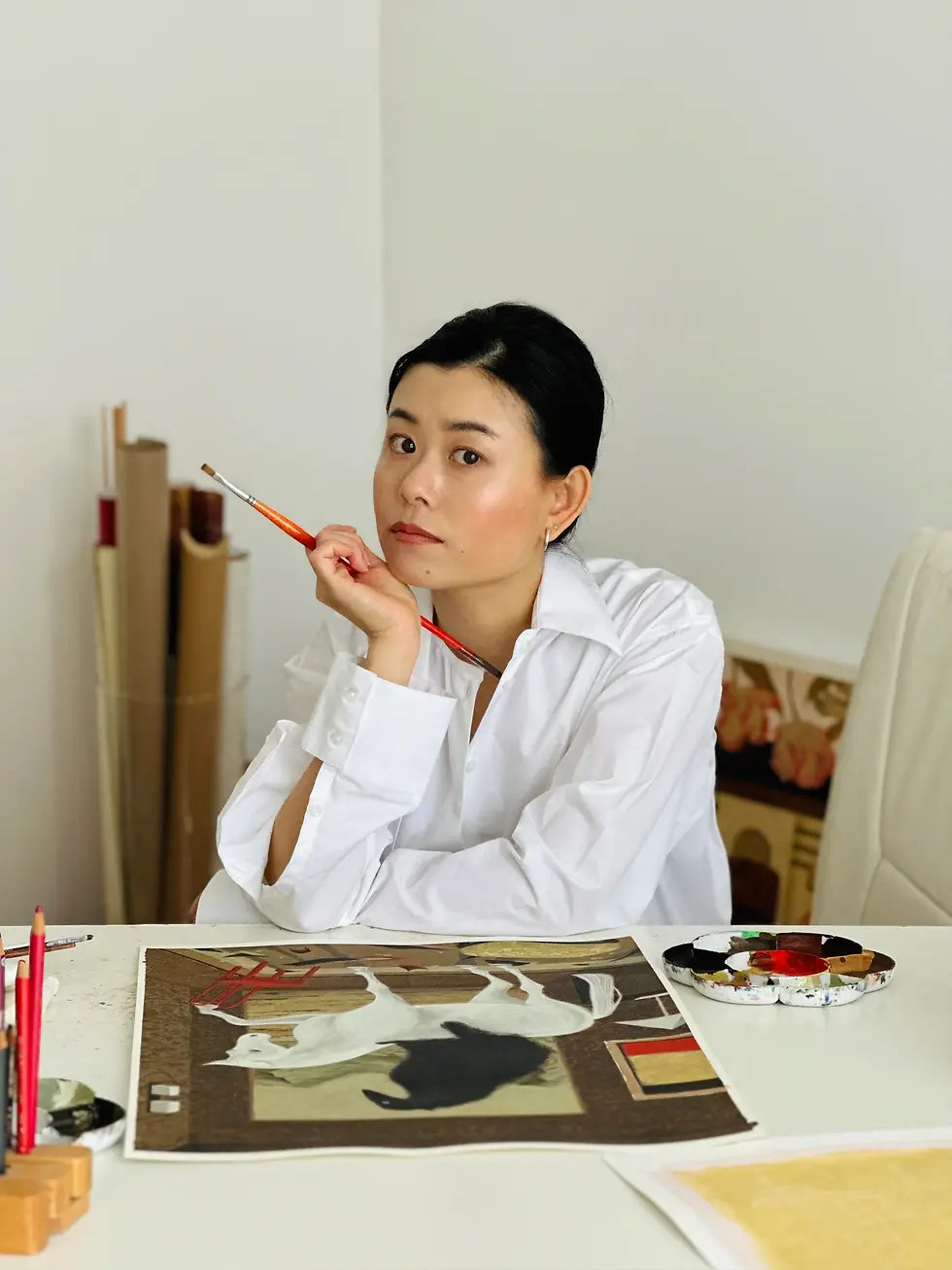
Seth Pick
Seth Pick is a painter born in Reading and based in Berlin. He studied at Goldsmiths and then at the Städelschule under Michael Krebber, whose idea that painting exists in a state of uncertainty stuck with him. His paintings are packed with figures, interiors and bits of architecture, put together and reworked. His show titles say a lot: FAILING, CRY, Humiliations. The most recent, NO LONG TERM (the last paintings), takes its name partly from Mark Fisher and opened this year at Galerie Tobias Naehring in Leipzig.

Q: You went from Goldsmiths to the Städelschule with Michael Krebber, and now you're in Berlin. Tell us a bit about that path.
A: As a teenager I was very drawn to the freedom and possibility of the London art scene of the 80s and 90s, and Goldsmiths played a central role in that. It felt like the only option. After that, the opportunity to study at the Städelschule, and especially with Michael Krebber, was a kind of no-brainer. His thinking—and what his work does—has been very important to me. One of the foundations of his work is the idea that painting exists in a state of uncertainty. That's something I've held onto. I don't want the paintings to feel resolved, or certain of themselves.
Q: Your show titles are hard to ignore. FAILING, CRY, Humiliations. Do they come before or after the work?
A: Titles are tricky. I don't want them to be bombastic or overdetermined—they come from a much more modest place. Usually they arrive during the work, but not as a way of explaining it. Ideally they introduce another layer—something that shifts the reading slightly without fixing it.
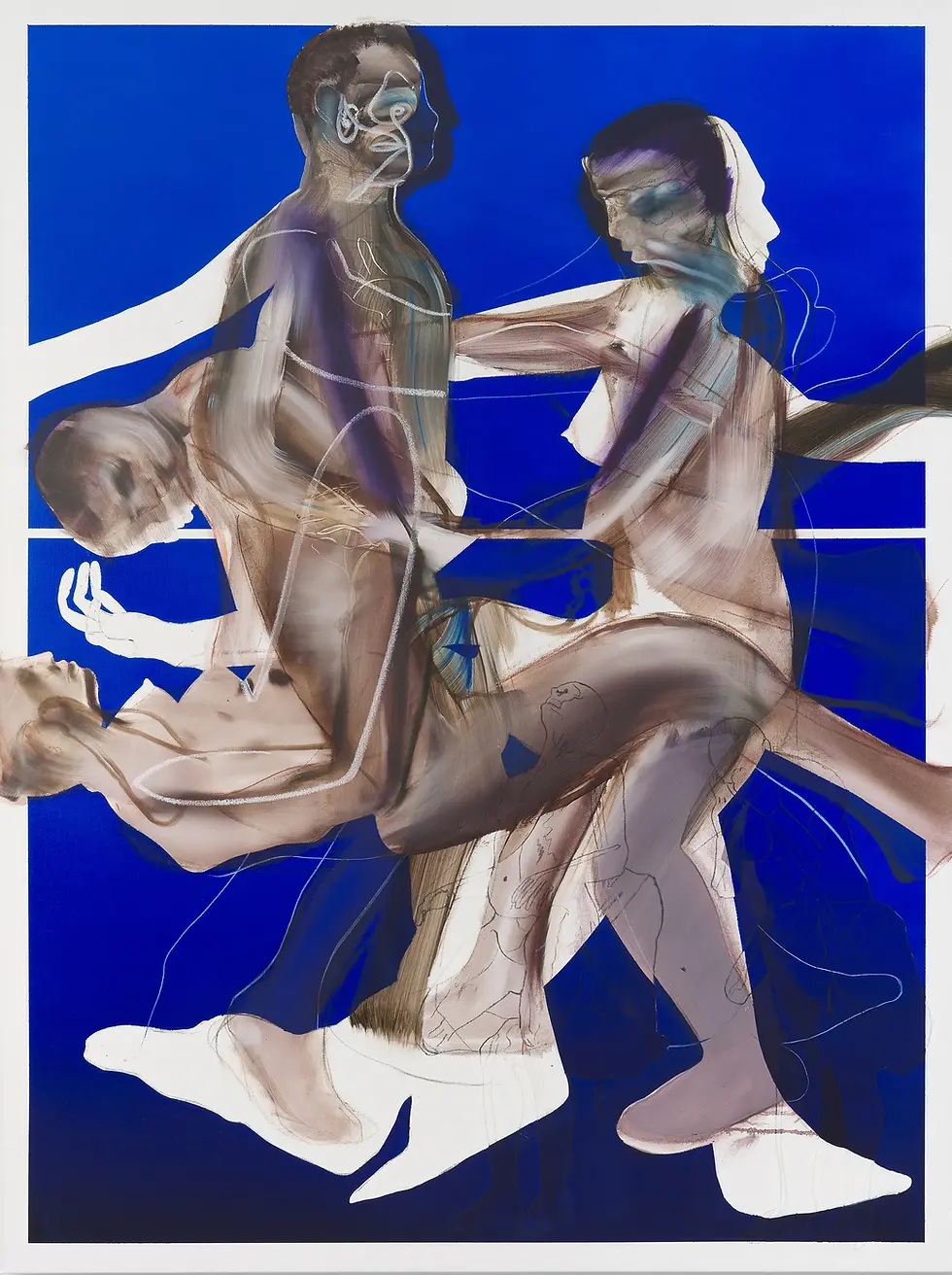
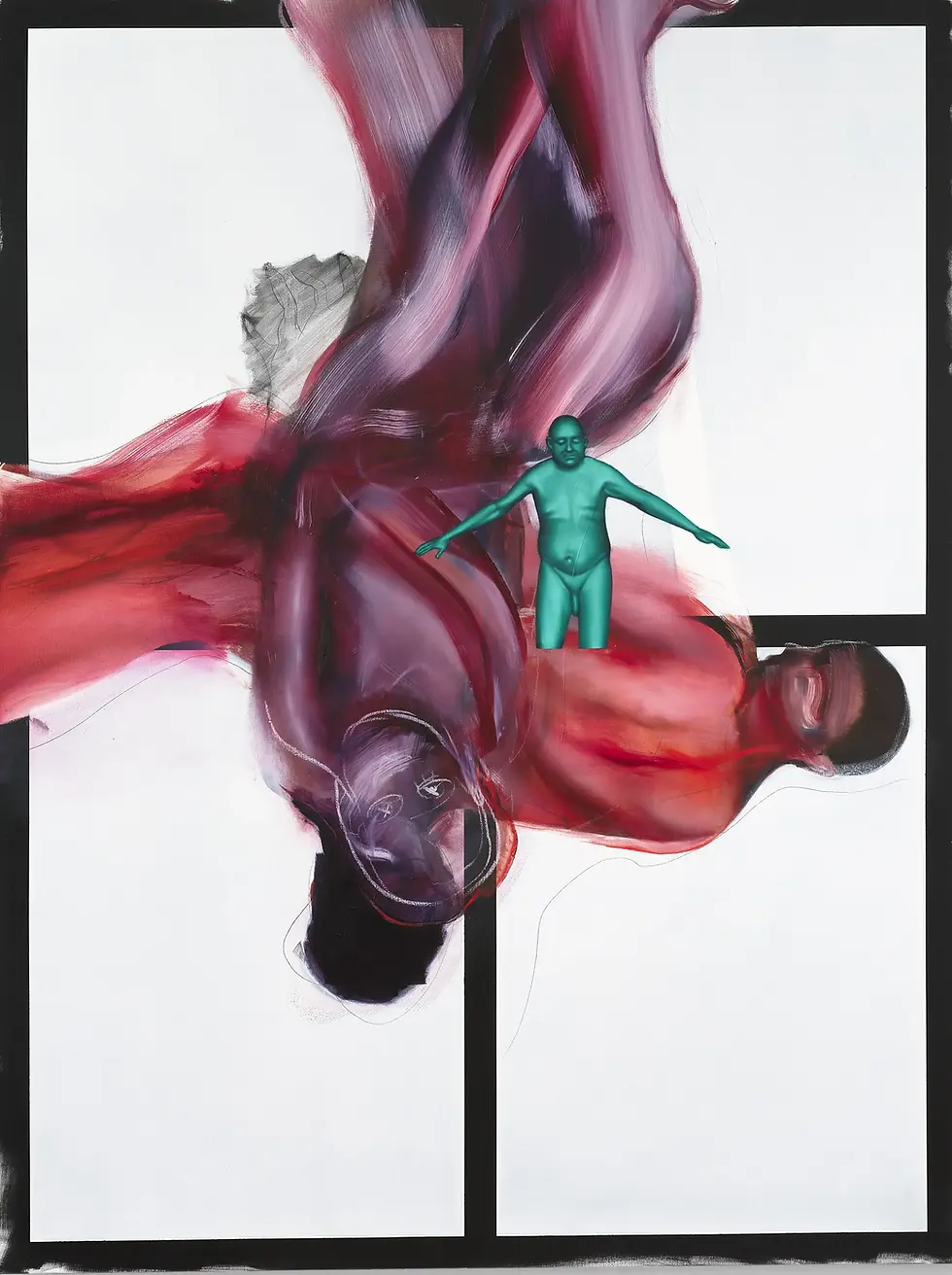
Q: There's humour in the work but also real weight. How does the absurd get in? Is it planned or does it just show up?
A: I've been thinking a lot about David Lynch, especially Twin Peaks, and how he balances sincerity with absurdity. He allows something genuinely emotional to sit next to something strange or even ridiculous. There's a repeated shot of a waterfall that I keep coming back to—it's very simple, but it holds a strange intensity.
That balance feels important. If everything becomes too serious, the painting closes down. But if it becomes too absurd, it loses weight. The space in between is where things remain alive.

Q: Your paintings are full of figures, interiors, architectural fragments, but none of it holds still. Are you building those spaces up or breaking them down?
A: Both. The paintings are built through accumulation, but that accumulation never resolves into something stable. Elements are added, removed, reworked—so the image is constantly shifting. Figures, fragments, and spaces are brought together, but they don't quite align. They coexist under pressure.
I'm not trying to construct a coherent space or narrative. It's more about holding different states at once—interior and exterior, structure and collapse, intimacy and exposure. The architecture often suggests order, but it doesn't fully function. It breaks down as you look at it. So the space is being built and undone simultaneously. The painting holds that tension rather than resolving it.
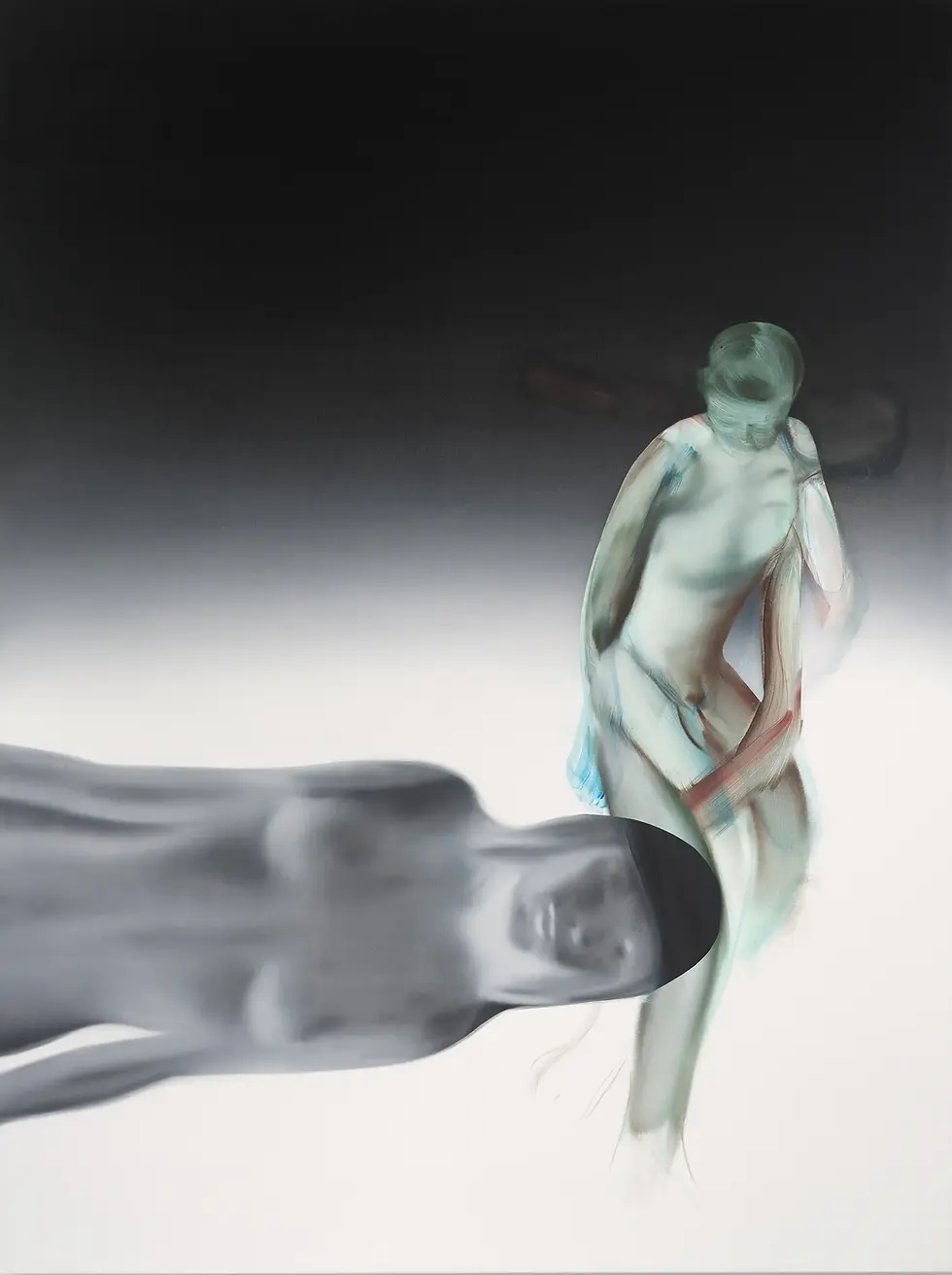
Q: Your most recent show is called NO LONG TERM (the last paintings). That's a heavy title. What's behind it?
A: The meaning is deliberately split. I like the ambiguity. The phrase comes partly from Mark Fisher, but also from a more general feeling. It can mean there's no long-term plan—which is true in the studio. But it also reflects a broader condition, a sense that long-term structures are collapsing.
Painting sits oddly within that because it's slow. It resists that condition, but it's also shaped by it. And "(the last paintings)"—that's me testing something out. Soundboarding the idea of stopping, of quitting. Seeing how it feels to frame the work that way. Maybe they are the last paintings.
Q: You've been between Leipzig and Berlin for shows lately. What's going on in the studio right now?
A: Rediscovery.