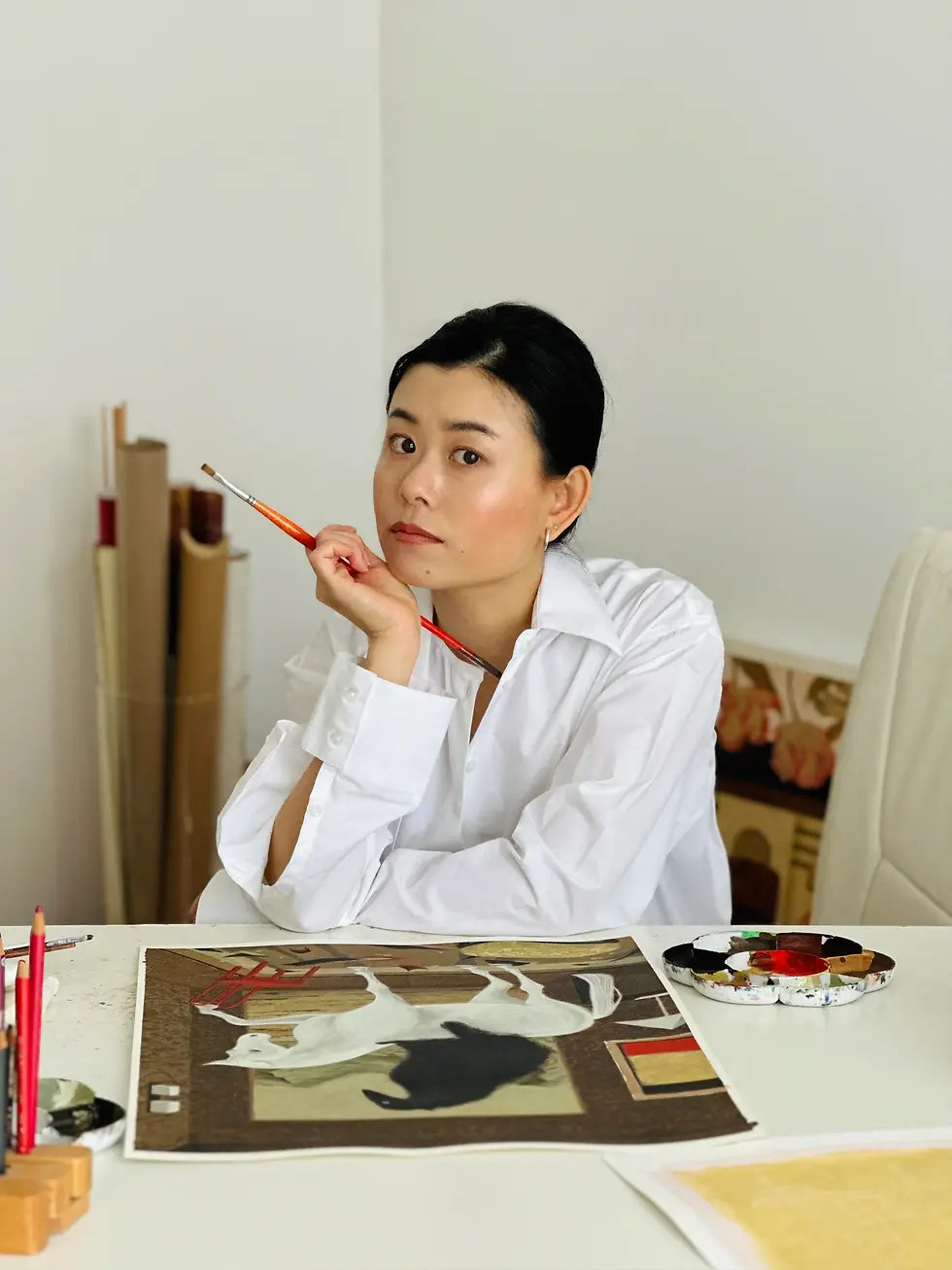
Rhys John Kaye
Rhys John Kaye is an artist based in Melbourne who works with painting, sculpture and writing. He paints in oil and also works with clay and found objects. He writes almost every day, mostly to process things, though sometimes text ends up in the finished work. He says his personal history inevitably ends up in everything he makes. He has had recent solo shows in Osaka, Seoul and Melbourne.

Q: You've shown in Osaka, Seoul, Melbourne. Tell us a bit about yourself and how you got to where you are now.
A: I'm an artist currently based in Melbourne, Australia. I work in a number of mediums but I've been in love with painting for as long as I can remember. I started as a child and never really stopped. I'd say I got to where I am because of the obsession I have with making work and the dedication I have to my practice.

Q: You paint, sculpt and write. What role does the writing play?
A: Writing acts as another tool to explore and capture ideas. I write as often as I sketch (most days), a lot of it never sees the light of day and its role is to process thoughts or document experiences to revisit. Sometimes I include text into finished works, I like the conflict and clarity words can contribute to an image.

Q: You've had a pretty transient, turbulent path. How much of that personal history ends up in the work?
A: My personal history inevitably informs all of my work. I try to make from a place of honesty, and that can't be separated from experience. At the same time, I'm always thinking about how those experiences resonate more broadly, how they connect to shared memory, energy, and the human condition, so the work remains open and universal rather than purely autobiographical.
Q: Ritual and belonging come up as themes alongside memory. What do those mean for you?
A: Ritual, belonging, and memory interest me because they're underlying structures that shape identity, often operating just below conscious awareness.
They're not stable or fixed—they repeat, shift, and evolve, and that instability is something I keep returning to. I'm drawn to how they point to forces that aren't always visible, but still quietly determine how we understand ourselves and relate to others.

Q: You work with oil paint but also clay and found objects. When does something need to become three-dimensional?
A: I'm drawn to the physicality of a work and the evidence of its making. The brushstrokes, the weight of the paint, the scratches and marks all carry energy, so in a way I already think of my paintings as sculptural. Moving into clay or found objects feels like a natural extension and a way to expand that energy directly. In three dimensions, the work can have a presence that feels like it connects with those invisible forces I'm exploring.

Q: You've been showing a lot internationally lately. What's keeping you busy in the studio right now?
A: I'm having a solo exhibition at the start of May and a few group shows shortly afterwards. I've been painting a lot lately. The studio is overflowing with new work at the moment and I'm in the fun stages of making some experimental frames and sculptures while I decide what to share and wait for everything to dry.