9 Independent Art Spaces in Paris We Keep Returning To
Paris has more than a thousand contemporary art galleries. Many sit within walking distance of each other in the Marais and Saint-Germain-des-Prés, but these are the nine independent spaces we keep returning to. One is a former ballroom dedicated entirely to photography. Another started out of one man's apartment.

Le BAL
Founded in 2010 by Raymond Depardon and Diane Dufour, Le BAL is a non-profit space dedicated entirely to the documentary image: photography, video, cinema, and new media. It's housed in a former 1930s dance hall, 350 square meters split across two floors, plus a photography bookshop and a café.

Galerie Chantal Crousel
Chantal Crousel opened her gallery in 1980 and moved it to rue Charlot, at the back of a Marais courtyard, in 2005. Over four decades she has given first French solo shows to Tony Cragg and Cindy Sherman, and the gallery still represents artists like Mona Hatoum, Wade Guyton, and Thomas Hirschhorn.

Galerie Crèvecoeur
Founded in 2008 by Axel Dibie and Alix Dionot-Morani, Crèvecoeur has grown to three spaces, including its main 20th-arrondissement location and a smaller one near the Seine. The gallery co-founded Paris Internationale, the alternative fair that reshaped how young galleries get discovered in the city.

Galerie Nathalie Obadia
Nathalie Obadia opened her first gallery in the Marais in 1993, after four years working at Galerie Daniel Templon. She built her program around a generation of French painters before expanding to international names like Fiona Rae and Albert Oehlen. Her program leans toward feminist and politically engaged practice, with two Paris locations now running in parallel.

Galerie Thaddaeus Ropac
Founded by the Austrian gallerist Thaddaeus Ropac in 1983, the Paris gallery has been in the Marais since 1990. The gallery space spans four floors and roughly 1,000 square meters, showing artists from Georg Baselitz to Elizabeth Peyton. Ropac also runs galleries in London, Salzburg, Milan and Seoul.

Galerie Templon
Daniel Templon opened this gallery in 1972, making it one of the oldest still running in the city. Templon was among the first Paris galleries to show Andy Warhol, and it remains a fixture for anyone tracing the last five decades of contemporary art in France.

Galerie Christophe Gaillard
Founded in 2007, Christophe Gaillard moved his gallery into a 300-square-meter 17th-century mansion in the Marais in 2015. The program is known for championing women artists, alongside estates like Michel Journiac and Pierre Tal Coat and a younger generation including Julien Des Monstiers and Rachel de Joode.

Galerie Lelong
Galerie Lelong grew out of Galerie Maeght, founded in 1945, and adopted its current name and structure in 1981 under Daniel Lelong, Jacques Dupin, and Jean Frémon. It built its reputation representing Joan Miró, Francis Bacon, and Antoni Tàpies, and today Lelong shows artists including Kiki Smith, David Hockney, and Paula Rego across two Paris spaces.
Galerie Perrotin
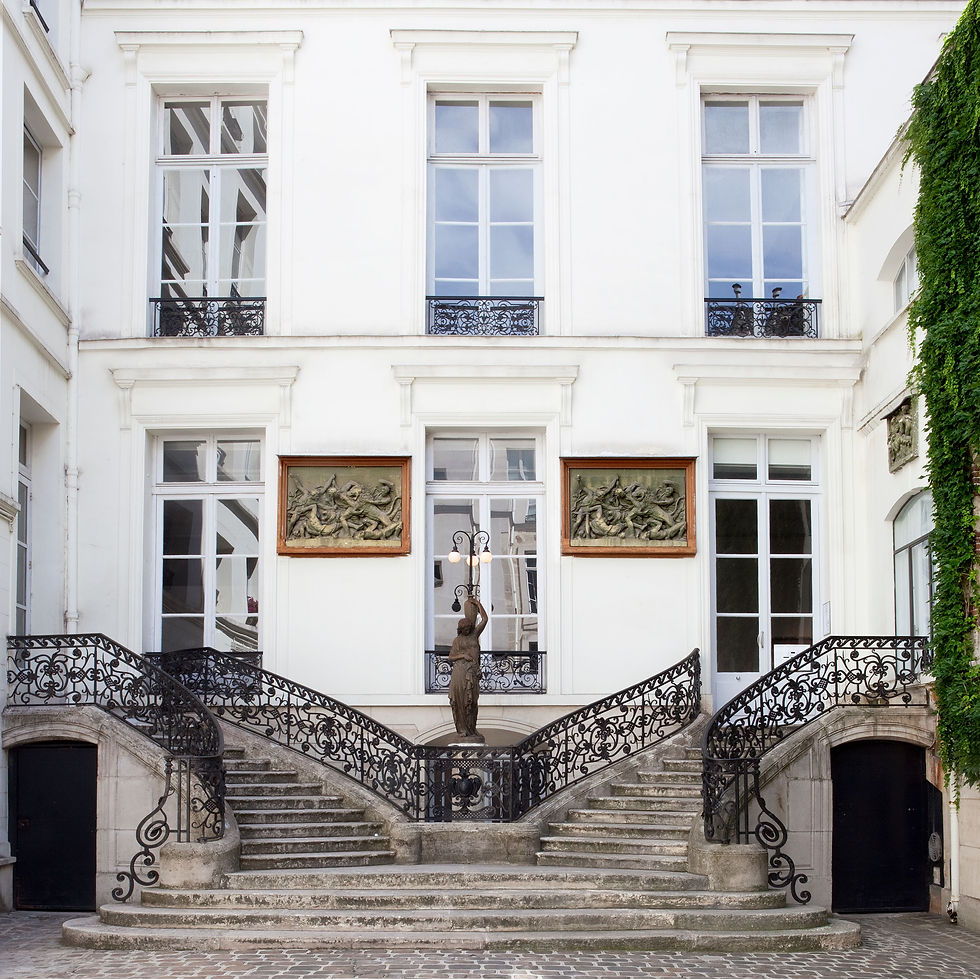
Emmanuel Perrotin opened his first gallery from his own apartment in 1990, at 21 years old. Galerie Perrotin now fills an 18th-century townhouse and can draw up to 900 visitors a day for its biggest shows, a scale that started from that one-room beginning.


