Toma Gerzha
Toma Gerzha is a photographer and artist-in-residence at Treehouse on the NDSM Wharf in Amsterdam. She moved to the Netherlands from Russia as a child and could not speak Dutch or English at first, so she talked through photos on an old Nokia phone. In 2021 she started Control Refresh, photographing teenagers in small Russian towns she found through Instagram. After 2022 she went back to the same people to see how their lives had changed. Her AI project .ru was shown at the Stedelijk Museum in 2024.

Q: You were born in Moscow and came to the Netherlands as a child. How did you get to photography?
A: I think photography started for me before I understood it as photography. When I moved to the Netherlands as a child, I did not speak Dutch or English, so for a while I communicated through drawings, gestures and photographs on an old Nokia phone. Images became a kind of language for me. Later, around the age of ten, I became obsessed with making things for the internet. I photographed my surroundings, made little films about school, drawing tutorials and music videos, first with a phone, then a GoPro and my mother's Nikon D90. I also kept moving between Russia and the Netherlands, and quite early I became interested in the differences between those two environments. The camera became a way of understanding why both places felt familiar to me, but neither of them felt completely like home.

Q: How did you get to know the teenagers in Control Refresh?
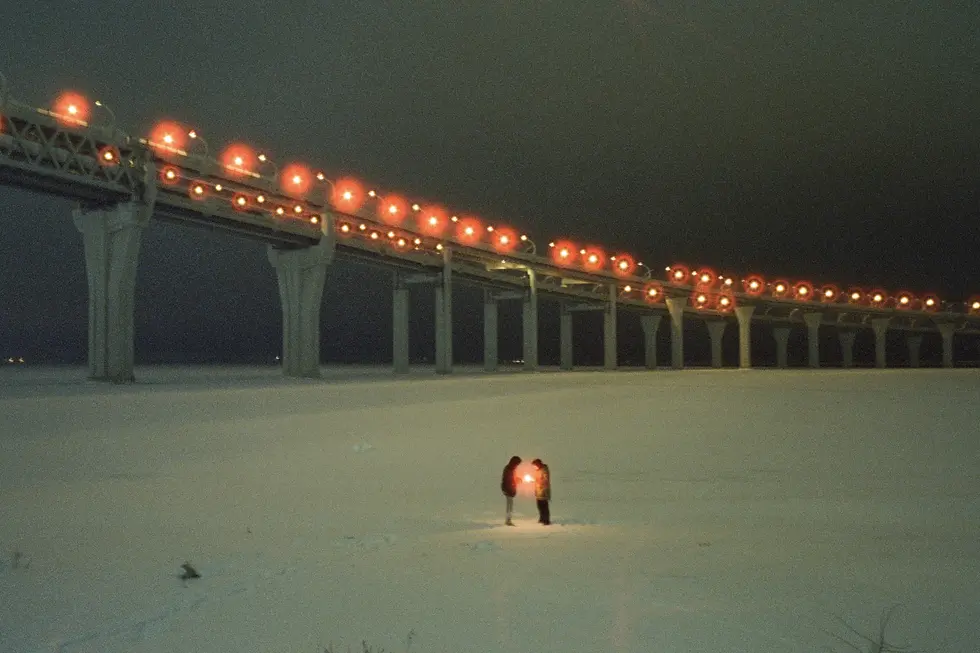
A: It started very naturally. I regularly visited my grandparents in Russia, so the first people I photographed were my own friends around the village where they lived. When the project became more serious, I started choosing smaller cities I wanted to visit and looking for people there through Instagram. I searched geotags, found people around my age and simply sent them a message asking whether I could photograph them. Many said yes. Then I met their friends, families and other people through them, so the project grew almost like a social network in real life. I think the trust was possible because I was not arriving as a completely external photographer. I spoke the language, understood many of the references, and we were part of the same generation. In a way, the youth I was photographing was also my own youth.

Q: You kept going back to the same young people after 2022. What did you see change in them?
A: What changed most was their relationship to the future. Before 2022, a lot of our conversations were about relationships, school, boredom, parties, work and where they wanted to live. After the full-scale invasion of Ukraine, those same questions became connected to much bigger uncertainties. Some people I knew had been detained in connection with protests, some left Russia because they were afraid of military service, and others became much more determined to leave their parents' homes or the country. At the same time, everyday life continued. They still studied, fell in love, went to parties, worked and saw their families. That contradiction became very important to the project. The political situation could completely alter someone's possibilities while daily life still looked surprisingly ordinary. I think that is why Control Refresh gradually became less about youth culture and more like a time document.

Q: Tradition, social media and politics all pull at these young people at the same time. How do you photograph that?
A: I do not really try to illustrate tradition, social media and politics separately. I am more interested in the moments where they exist together. Politics can sit in the background of an otherwise ordinary photograph, while the person in front of it is thinking about a relationship or where they are going that evening. Tradition appears through families, domestic spaces, routines and expectations. Social media is almost another environment entirely, one my generation grew up inside. It is also part of the method of the project, because I initially found many of the people through Instagram and posted the work almost live while I was making it. Visually, I try not to make the photographs too controlled. I used everything from a Nokia and iPhone to Super 8, Polaroid and medium-format film. I like blur, underexposure and imperfection because memory is not perfectly resolved either.
Q: .ru was made with AI images and went to the Stedelijk. Where did that project come from?
A: .ru came directly out of Control Refresh. After the war started, continuing to travel and photograph in the same way became increasingly difficult and risky. For a period I returned to the Netherlands and paused the documentary project, but I still wanted to work with the material I had collected. That was when I began experimenting with AI. Instead of asking it to invent Russia from nothing, I started combining elements from my own photographs, a person from one image, an interior or landscape from another, and using those fragments to construct scenes that never literally existed. For me, that became a way of working with distance and memory. Control Refresh asks what a photograph can tell us about a real place and time, while .ru introduces reconstruction and uncertainty into that question. The project was later presented as part of Rietveld Uncut at the Stedelijk Museum in 2024.
Q: You've been at Treehouse on the NDSM Wharf since 2023. What are you working on right now?
A: My practice has become much more hybrid since I started working at Treehouse. Photography is still the base of everything I do, but now I move between photography, animation, drawing, AI and physical experiments with images. At the moment I am especially interested in moving-image work and in combining my photographs and drawings with animation rather than treating AI as a finished visual style by itself. I am also working on ways of making digital images physical again, including printed moving-image experiments and my ongoing From Me, To Me project, where photographs from my everyday camera roll become real Dutch postage stamps that can actually be used. I think the main question in my work now is how an image can move between being a photograph, an object, an animation and something digital while still keeping traces of the original photograph inside it.


