Louise Knowles
- 10 hours ago
- 4 min read
Louise Knowles is a painter based on the northern beaches of Sydney. She works in abstraction, paints in oils, and has done since the nineties, when she took classes with Sarah Mufford. She paints in layers, and the first ones are still there at the end. She builds compositions around negative space. Her Arteway courses, Colour-Led Landscapes and Going Big, break down that process.
In our interview, we talk about the trips to the Pilbara and Kimberley that changed her color, why she starts a painting without a plan, and what she wants to make next.
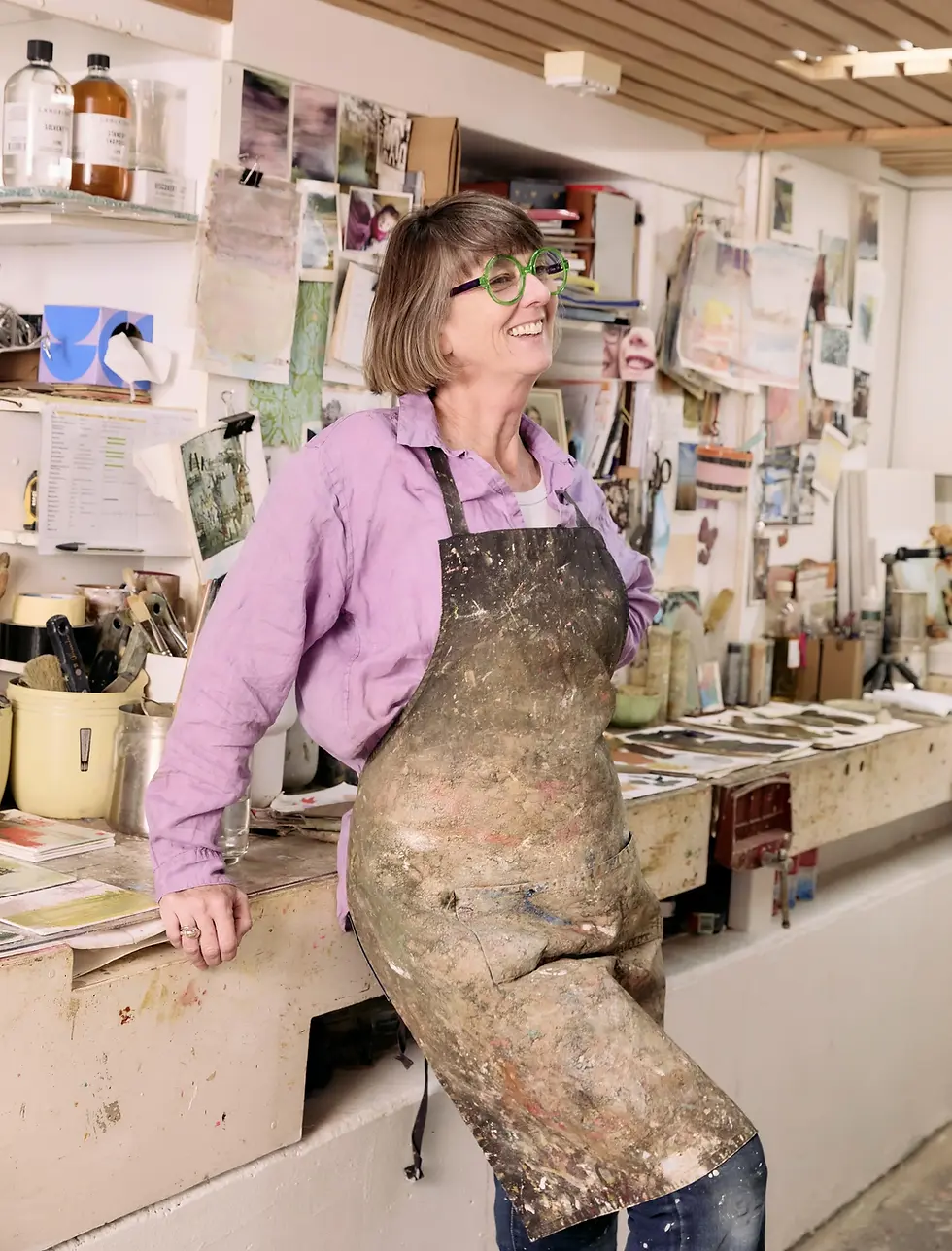
Q: You've painted in oils since the late nineties. How did it start for you?
A: I started painting at school, but it was in the 1990s, when I took classes with Sarah Mufford, that I truly fell in love with oil painting. She introduced me to the richness of oils, and I was immediately hooked. I love the texture, the colour, and the endless possibilities that come from using different mediums to create beautiful surface effects. Sarah was incredibly generous with both her knowledge and encouragement, and she had a lasting influence on my practice.

Q: You're most fascinated by negative space, the empty parts of a composition. What do you find there?
A: When I'm creating abstract work, composition becomes the heart of the painting. It's always been the most challenging aspect for me, which is exactly why it fascinates me. You learn the rules of composition, but sometimes it's by breaking those rules that the most dynamic and exciting paintings emerge. I believe in giving the eye somewhere to rest before it's drawn into areas of vibrant colour and texture. Those quieter spaces make the more energetic passages even more powerful.

Q: You layer color so the different stages of a painting stay visible. Why keep them in view?
A: My process usually begins with layers of colour. It's a liberating way to start, allowing me to paint with colours I love while easing into whatever the painting might become. I never begin with a fixed outcome in mind. Instead, I'm trying to capture a mood or evoke the feeling of being in a particular place.
As the painting develops, earlier layers often remain visible, revealing the journey the work has taken. Every completed layer poses a new set of questions—a philosophy shared by artist and tutor Ross Laurie, whose workshops have been an important influence. Even when the underpainting seems unrelated to the finished work, small glimpses of it can remain, adding history, depth and a sense of discovery.

Q: Abstraction is your newest focus. How did you start moving in that direction?
A: Earlier in my career, I painted interiors and still-life subjects, focusing on the built environment. That changed when I began studying abstract landscape. Suddenly I became immersed in the relationships between colour, light and space. Working on a smaller scale allowed me to experiment freely, and I found endless inspiration in the landscapes I'd visited. More than depicting a place, I wanted to communicate how it felt to be there. I don't enjoy repeating myself, either in style or subject matter.
Experimentation continues to be an essential part of my practice, and I often draw on both memory and photography to reconnect with places that have left a lasting impression.

Q: Painting gives you time to reflect and process what you feel. How does that work for you?
A: In the studio, I spend as much time thinking as I do painting, reflecting on the emotions and memories connected to the landscapes that inspire me. I've been fortunate to travel widely, and recent trips to the Pilbara and Kimberley regions of north-west Australia have had a profound impact on my work. The vastness of the landscape and its extraordinary colours continue to influence the direction of my paintings.
Q: In your statement, light, color and shadow stand for life, love and loss. How literal is that when you're painting?
A: In 2021, I was finally able to dedicate myself to painting full-time. It was also a deeply emotional period, as my lovely mum had recently died. Time in the studio became a way of processing my grief while celebrating the remarkable person she was. She was creative, warm and deeply loved by everyone who knew her. During that time I found myself drawn to warm pinks and oranges—colours that brought me joy and, in many ways, reminded me of her. Even now, I see pink woven throughout the world around me.
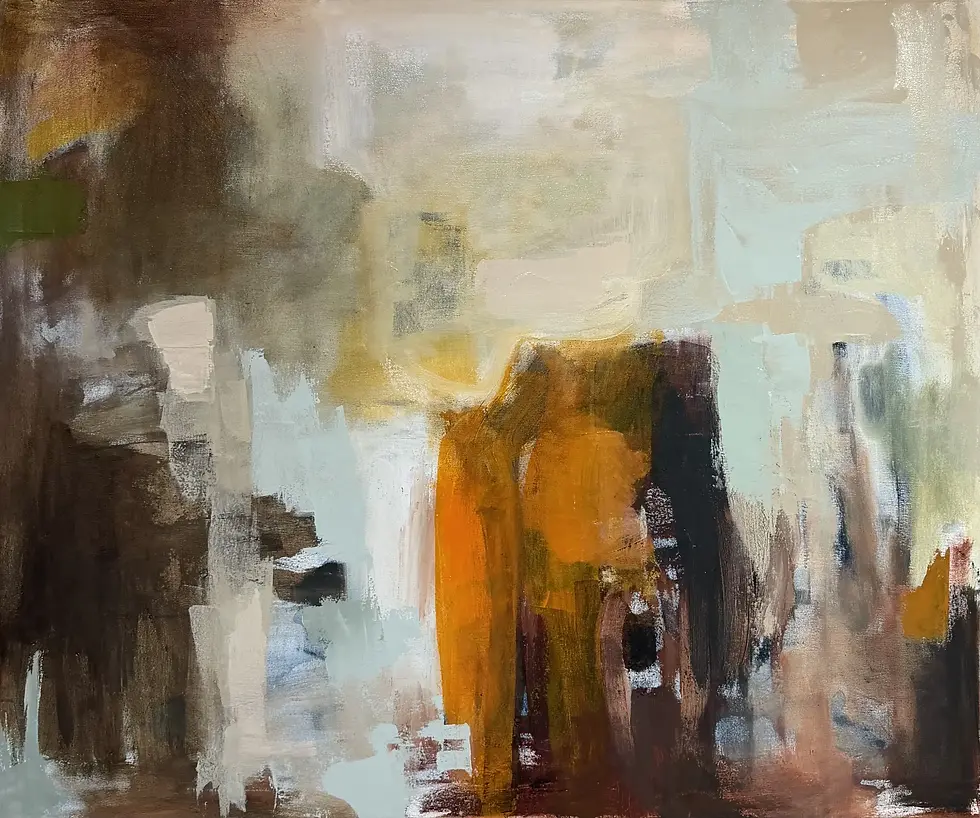
Q: You've taken on commissions through your gallery. How do these shape the work?
A: I've also been fortunate to complete many commissions through Studio Gallery Group. Commissions bring their own challenges because they come with expectations and a clear brief. I usually work on two or three paintings simultaneously, giving clients a choice while allowing the ideas to develop more naturally. I enjoy the challenge, and it's incredibly rewarding when a commission resonates with both the client and my own creative vision.
Q: What do you want to explore next?
A: Although abstract landscape is now central to my practice, I still have a deep appreciation for architecture and the design of the 1950s, '60s and '70s. I may return to those themes one day, interpreted through the lens of where my work is now. For the moment, though, the landscape continues to draw me back. I can't imagine that influence leaving my practice any time soon.
All photography courtesy of Arteway.